
ladakh
February 2020
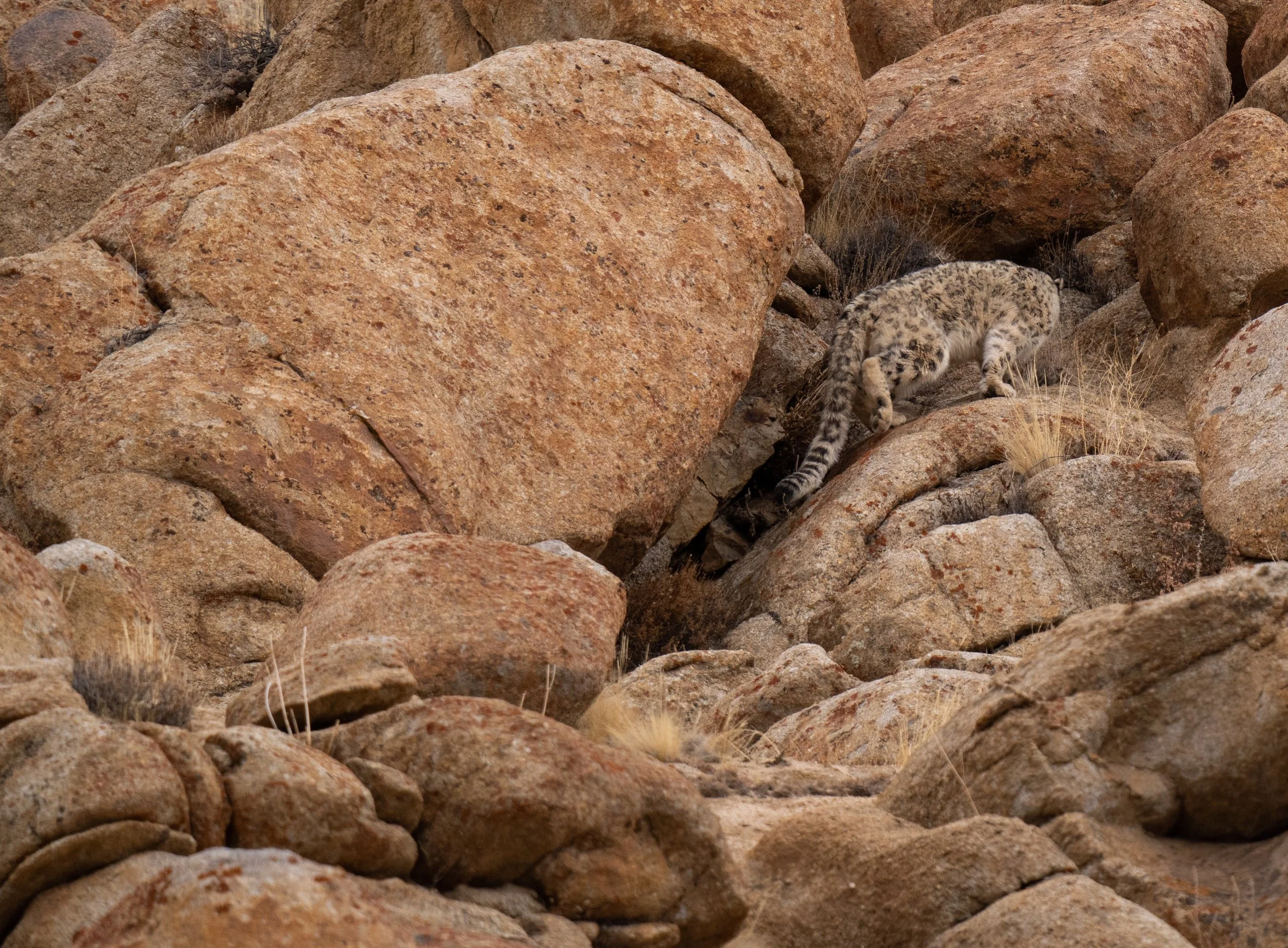
‘The Camouflage King’
————————————————————————
‘The Camouflage King…really? I’ve heard that before…’ I thought to myself as my guide explained how intrinsically difficult it was to spot the snow leopard in its natural habitat. I’ve got a few years under my belt these days when it comes to wildlife and being able to pick out that far off lion in the savannah grasses, an elusive leopard amongst the undergrowth, or a chameleon shielding itself from an encroaching predator is something I pride myself on. How wrong could I be though…and what time has passed since then and now.
I write this story at what we hope is the tail-end of the Covid ’19 lockdown at the end of June 2020. Things have changed a lot in the last few months, but my memories remain fresh from that recent India trip. It was a trip that I had been wanting to undertake for many years, but had just never really had cause. But what a focal point that trip will now be for me forever more, as we pushed farther north to natural isolation in the far Himalayan north, and the world slowly closed its doors behind us shutting down into its own, very new natural isolation.
We started this trip in the north western corner of India, in Jawai looking for the Asiatic leopard, another great master of camouflage - as it turned out, not as good as its counterpart just a tad further north. Jawai was amazing in itself, a wildlife ‘community reserve’ that is not ‘officially a reserve’ that just accepts its wild predatory neighbours to roam amongst its fields and community neighbourhoods. The Asiatic leopard is the dominant predator here, walking amongst the communities yet trusted by all. Lazing on huge rock outcrops surveying the fields below, and when disturbed, slinking into cave systems, disappearing down the labyrinthine networks of never-ending blackness. This is where you go if you want leopards in India; it is worth it. It is vastly unique in the work that has gone on, the community involvement, the conservation success story and what better way to enjoy it than relaxing in the comfort of Sujan Jawai Camp, the masters of community collaboration in this region.
But the story is not about this leopard, as graceful as they are. This story is about the snow leopard. With only a few thousand thought to remain in this world, the snow leopard is one of the most elusive of felines. Inhabiting the higher altitudes of around 4,000m plus, they are masters of both camouflage and of survival. These are harsh environs, yet remarkably alluring with a gentle people that are hospitable to the last. A corner of India that in most ways remains untouched yet has suffered beyond words, once again recently emphasised by the trans-frontier ruckus between China and India.
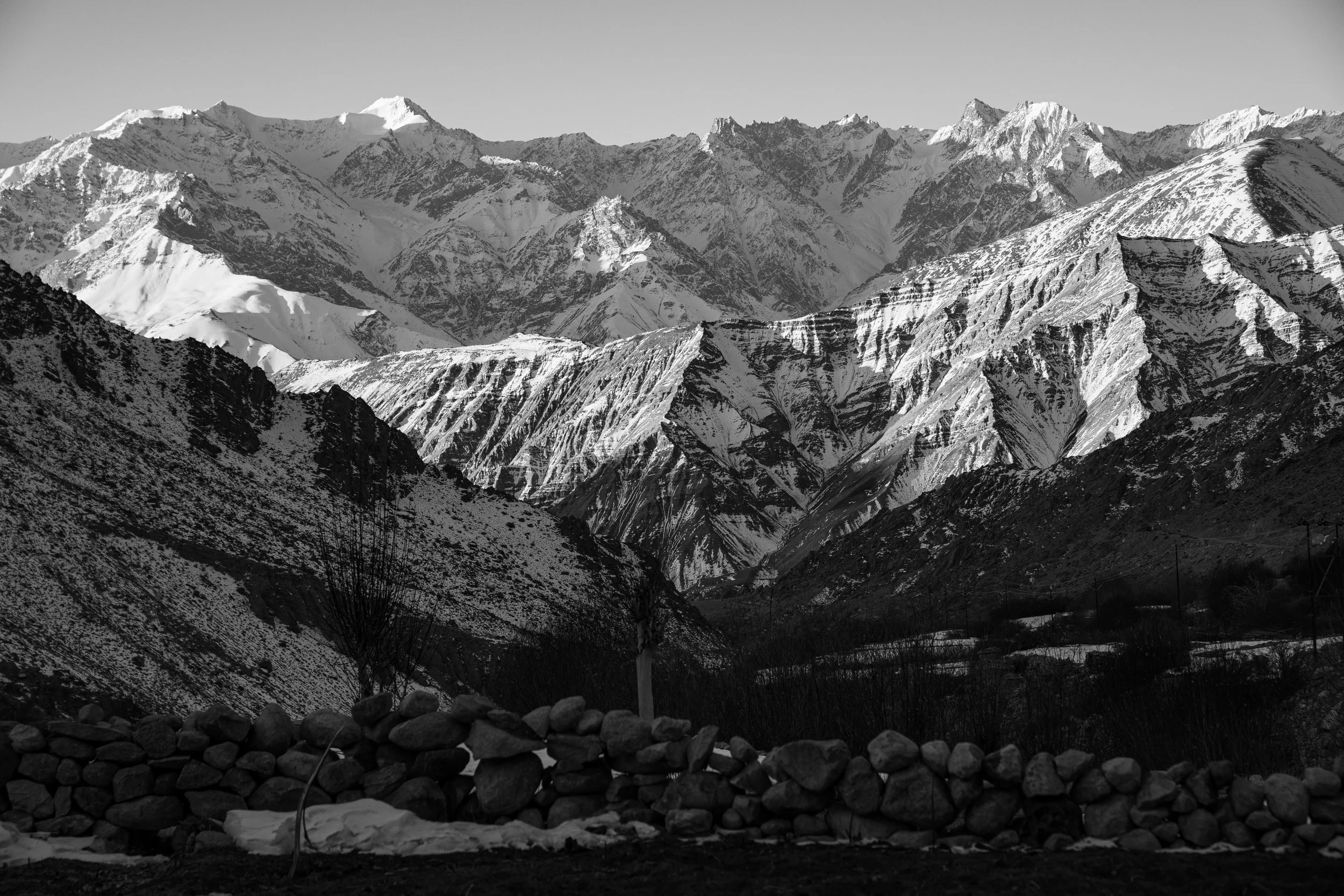
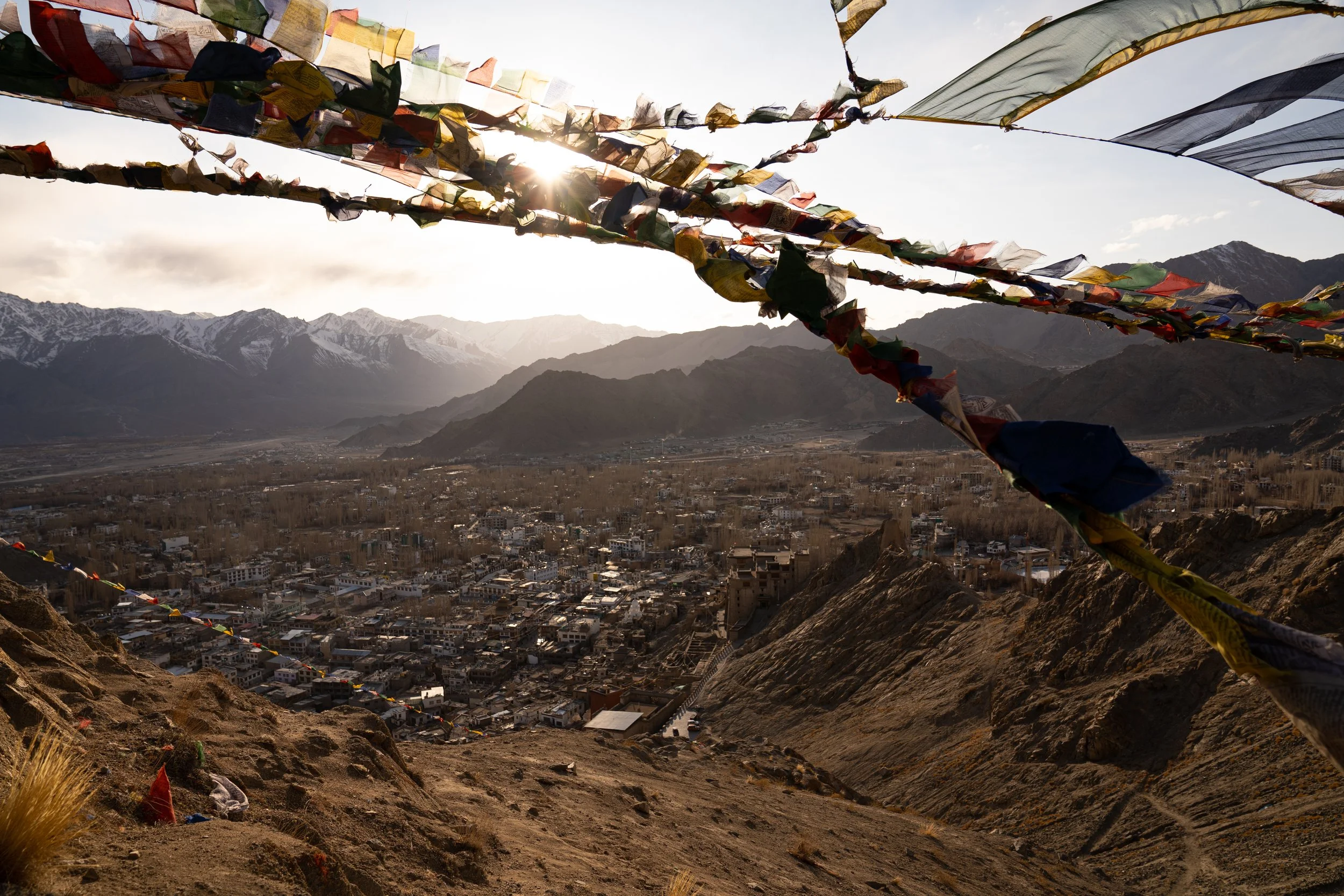
We fly north, leaving the bustle of Delhi behind, and with it, the whisperings of a virus beginning to take hold. There are already tales of its spread, hotels starting to empty, events starting to cancel, and airports starting to lockdown, but the world keeps turning, and we continue on, to our own self-imposed isolation in the far north of Ladakh. This is the staging post, the ‘launchpad’ for many an expedition. Traditionally it was for mountaineers and trekkers, but in recent years snow leopard fever is just beginning to take hold. Ladakh itself is small yet busy, we acclimatise, in more ways than one, before moving on. A 4hr drive pushing north and west, up into the hills, valleys drifting past below, until we reach our final destination, Snow Leopard Lodge. A small but comfortable locally run lodge at the heart of the valley, looking out over the mountains below. This is our self-imposed exile for the next week or so…
Confidence doesn’t always arrive with a bold entrance. Sometimes, it builds quietly, step by step, as we show up for ourselves day after day. It grows when we choose to try, even when we’re unsure of the outcome. Every time you take action despite self-doubt, you reinforce the belief that you’re capable. Confidence isn’t about having all the answers — it’s about trusting that you can figure it out along the way.
The key to making things happen isn’t waiting for the perfect moment; it’s starting with what you have, where you are. Big goals can feel overwhelming when viewed all at once, but momentum builds through small, consistent action. Whether you’re working toward a personal milestone or a professional dream, progress comes from showing up — not perfectly, but persistently. Action creates clarity, and over time, those steps forward add up to something real.
It’s a strange experience a snow leopard safari and one that at first I struggled to grasp. You’re not out every day, up at the crack of dawn like on a ‘normal safari’, walking the paths, driving the tracks and scanning the horizons, because there’s not really much point! These cats are elusive, and when I say elusive, I mean they are bloody impossible for the untrained eye to see. Until it gets trained that is…
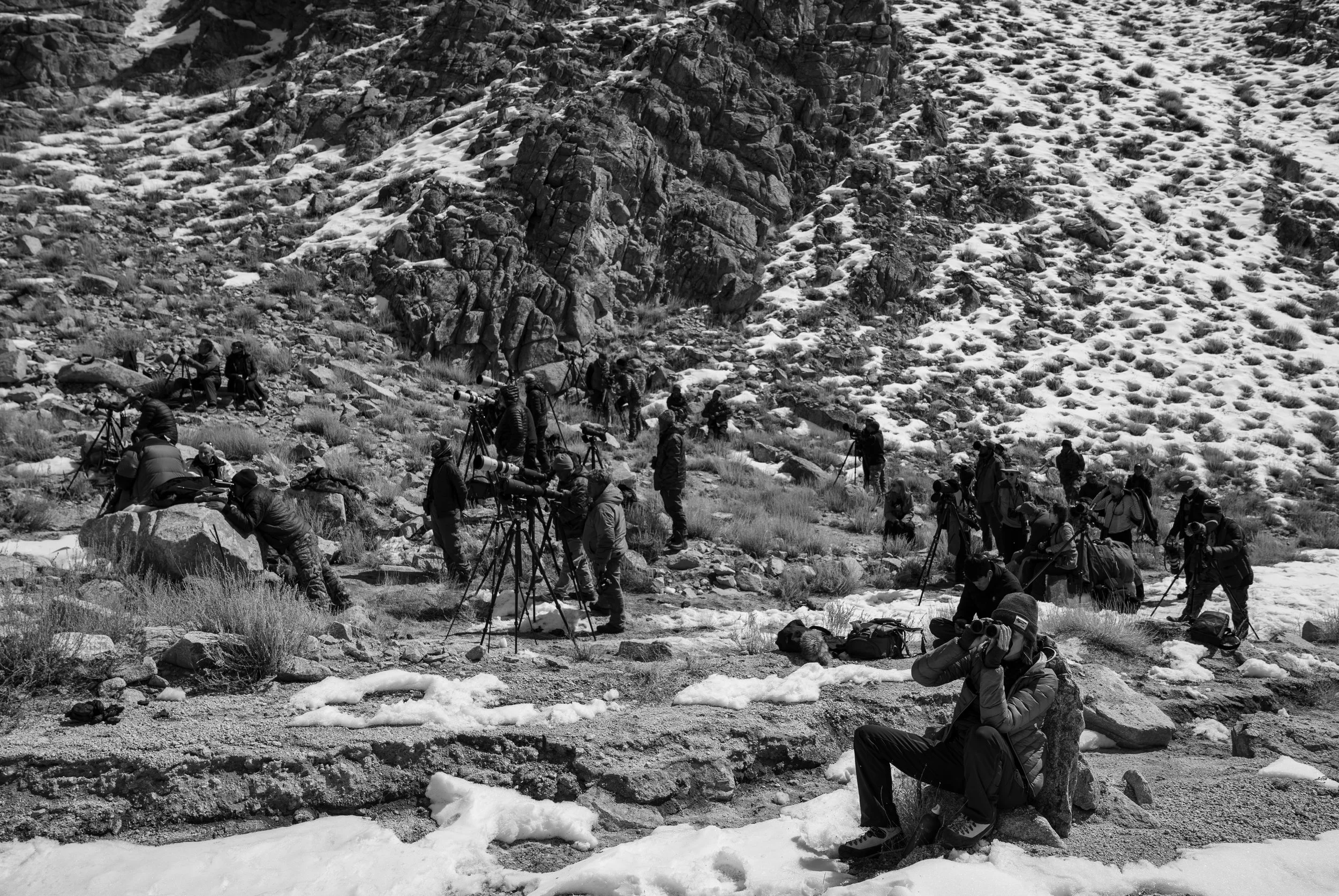
The pace of your safari here is slow, it generally consists of a wake-up call with a tea or hot chocolate in bed with lazy views out down the valley, then a breakfast listening to the radio calls of the spotters who set off at dawn to see what they can see. The day takes shape from here…
If the spotters have picked up tracks, or scat, or a sighting or more, you are off, bags ready, photo kit packed, and off down the mountain in search of the ghostly grail. If not, sit back, take to the spotting platform, or walk the roads looking for smaller critters such as the cheeky marmot, or the kings of the mountain, the ibex, golden eagle, or yak.
For further reaching days, your day may be spent working further afield, crossing mountain passes by road, scouring the ridgelines for that feline form, stopping for a chat in a local village, or pausing for a while to take in that unsuspecting view. It’s not just the snow leopard we wait for, its wolves, or fox, urial, or vultures. This is a world where there is nothing, at least at first there is nothing, this world teaches you to slow down, forces you to slow down, to stop, to register, to take in your surroundings, to take note, to stay woke. You could say this was a practice run, a practice run to where we find ourselves now, forced into isolation, forced to slow down, forced to take in our surroundings, to take note, to breathe, to wait whilst this pandemic burns itself out.
It is when we stop, that the world delivers.
And that’s exactly how it happened.
At lunch. And soup for that matter. The radio crackled, a buzz of energy ripples round the room, the guides are excited…’Go!’ A snow leopard has just been spotted stealing across the road in front of our friend Jonathan’s vehicle, ‘Go, Go, Go!’ Now this is where soup is not a good bedfellow for a snow leopard sighting. You try putting a bowl of soup down carefully! Needless to say, I ricochet out of the room half covered in soup and as I find out later, half dressed in a pair of crocs rather than my rugged walking boots! 4hrs later I am still standing on the mountainside, with cold toes to say the least. But it is worth it.
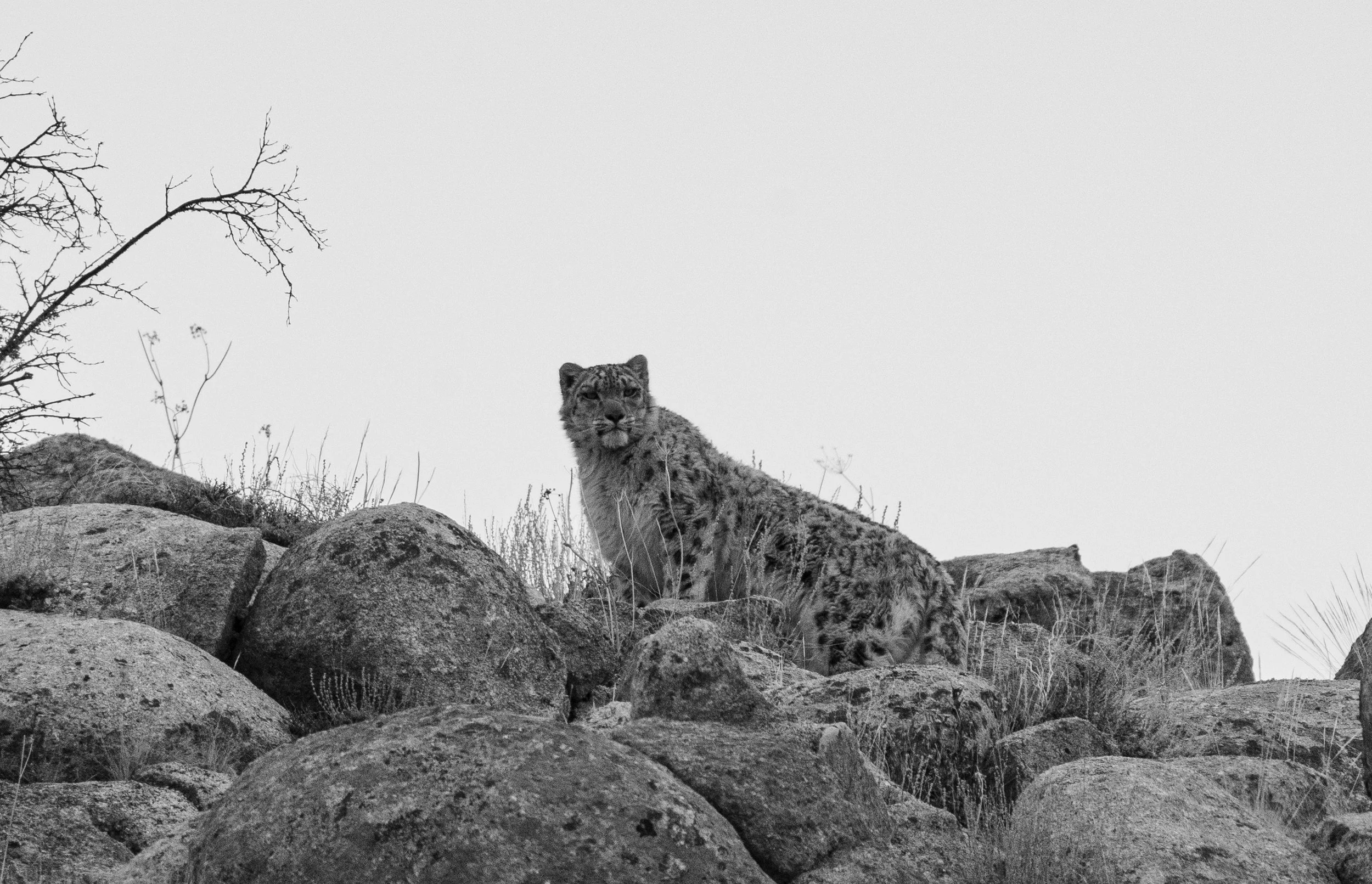
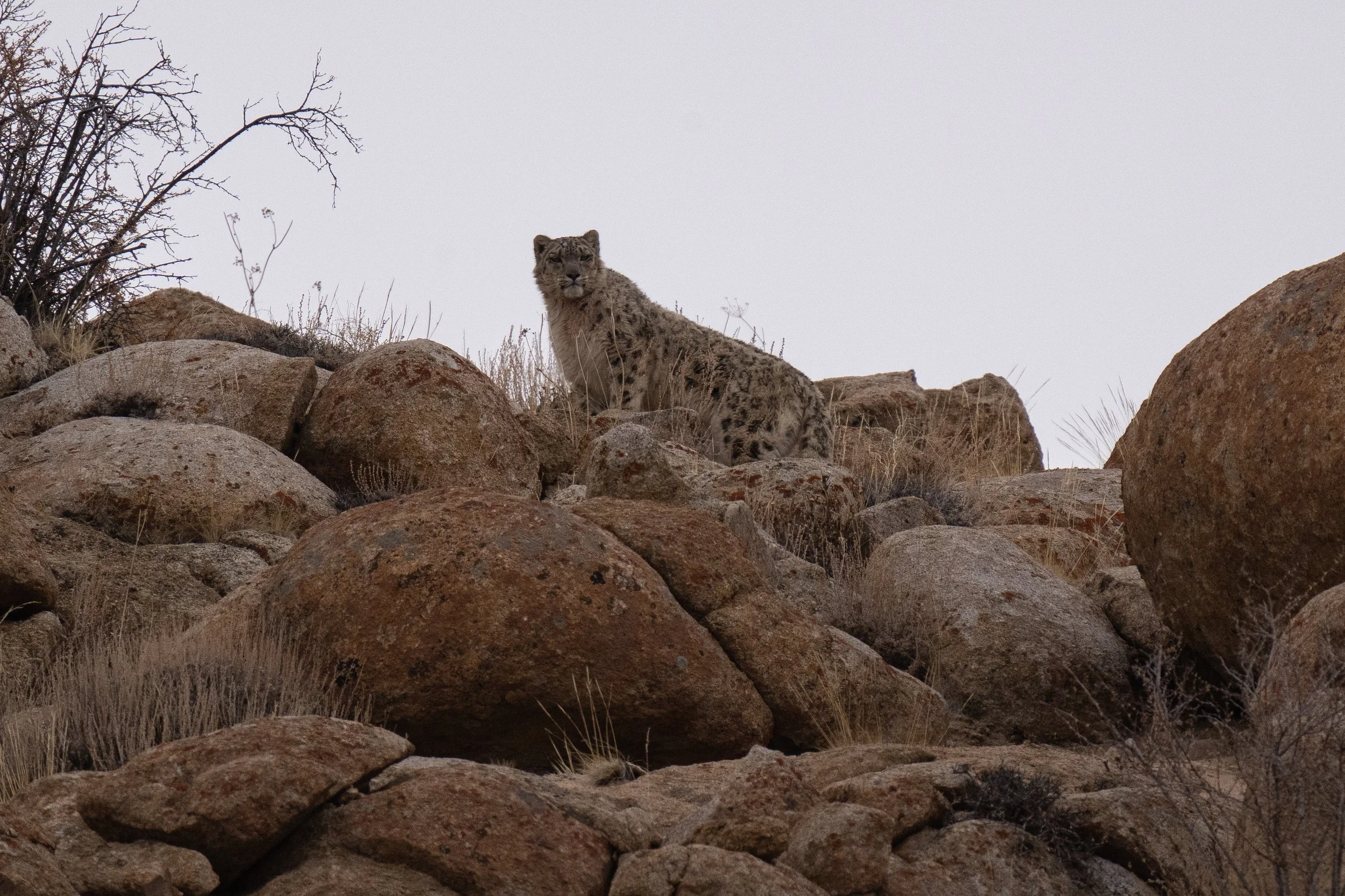
As we arrive on the scene, we scamper up a dusty roadside path, crocs slipping in the Himalayan dust, I round the corner to see one of the most stunning felines I have ever seen. Maybe 100 metres or so away, a ghostlike shape floats across the rocky slope, slinking round boulders, stepping its way gracefully uphill, stopping, glancing round inquisitively, vanishing. 20 seconds maybe, that’s all this was, but it felt like a lifetime, imprinted on my mind…but more was to come…
Our spotters, years of experience shining through, soon call back having located our ghostlike friend again. Dozing on a small ledge, we can just make out the charcoal ears of our feline foe. We wait. And we wait…4hrs later, my toes are rock solid with the cold. Crocs are most definitely not mountain gear! At 4,000m once the afternoon sun has disappeared behind the nearest ridgeline, the temperatures plummet and my sieve like crocs make themselves known. But it is worth it.
Almost on cue, as the sun drops, our mystical friend stands, stretches, looks down at us, and then gracefully
slinks his way up through the boulder field, liquid-like through the rocks, up to the top, cresting the ridgeline silhouetting himself against the dusky sky and disappears from view.
The few of us that remain (a few of our colder friends have beaten a hasty retreat back to the lodge) stand in shock and awe. Sightings like this are few and far between and this is gold dust of the snow leopard world. Such proximity, such simplicity, such brazen confidence displayed by this elusive apex of the feline world is rarely seen and even more rarely forgotten.
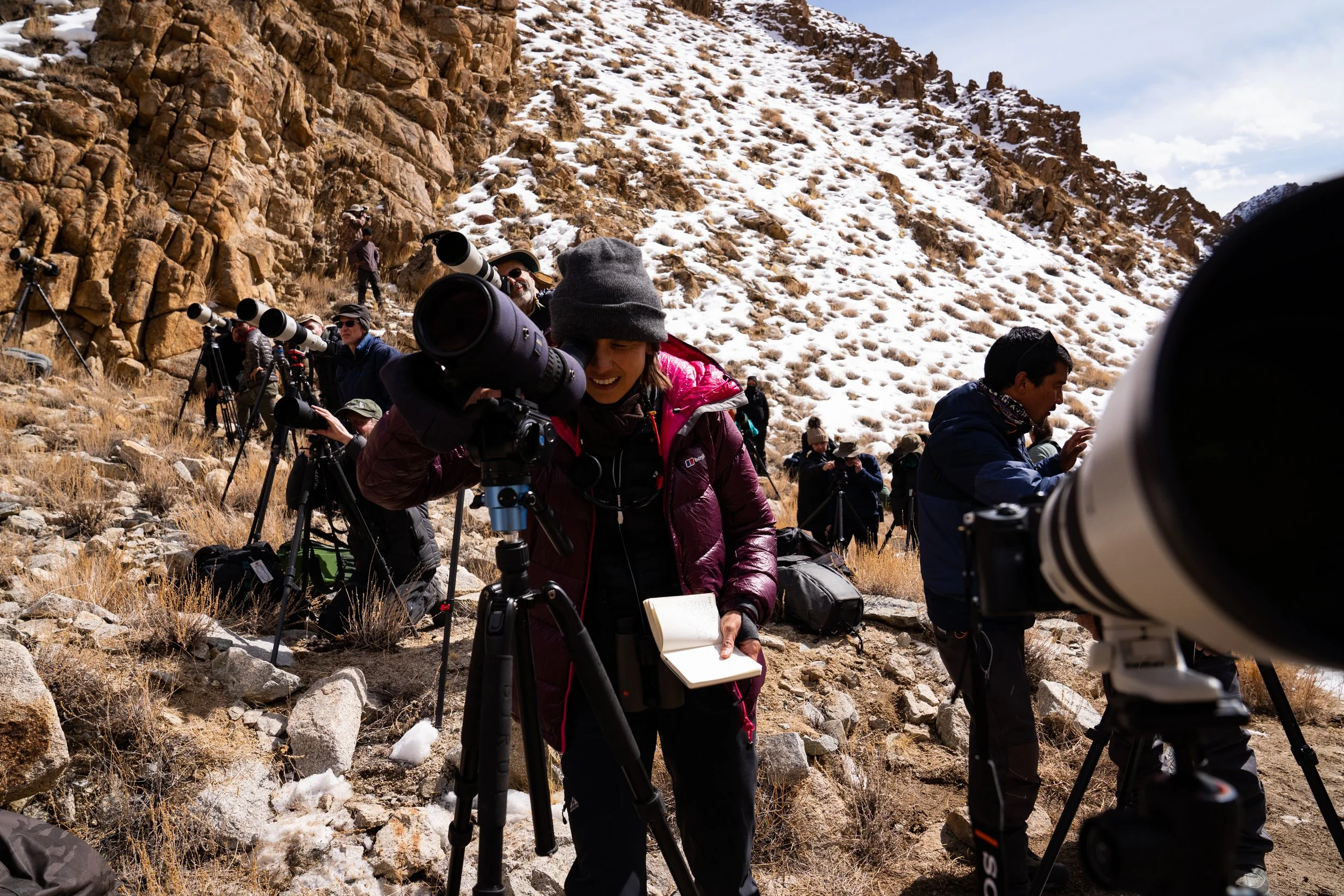
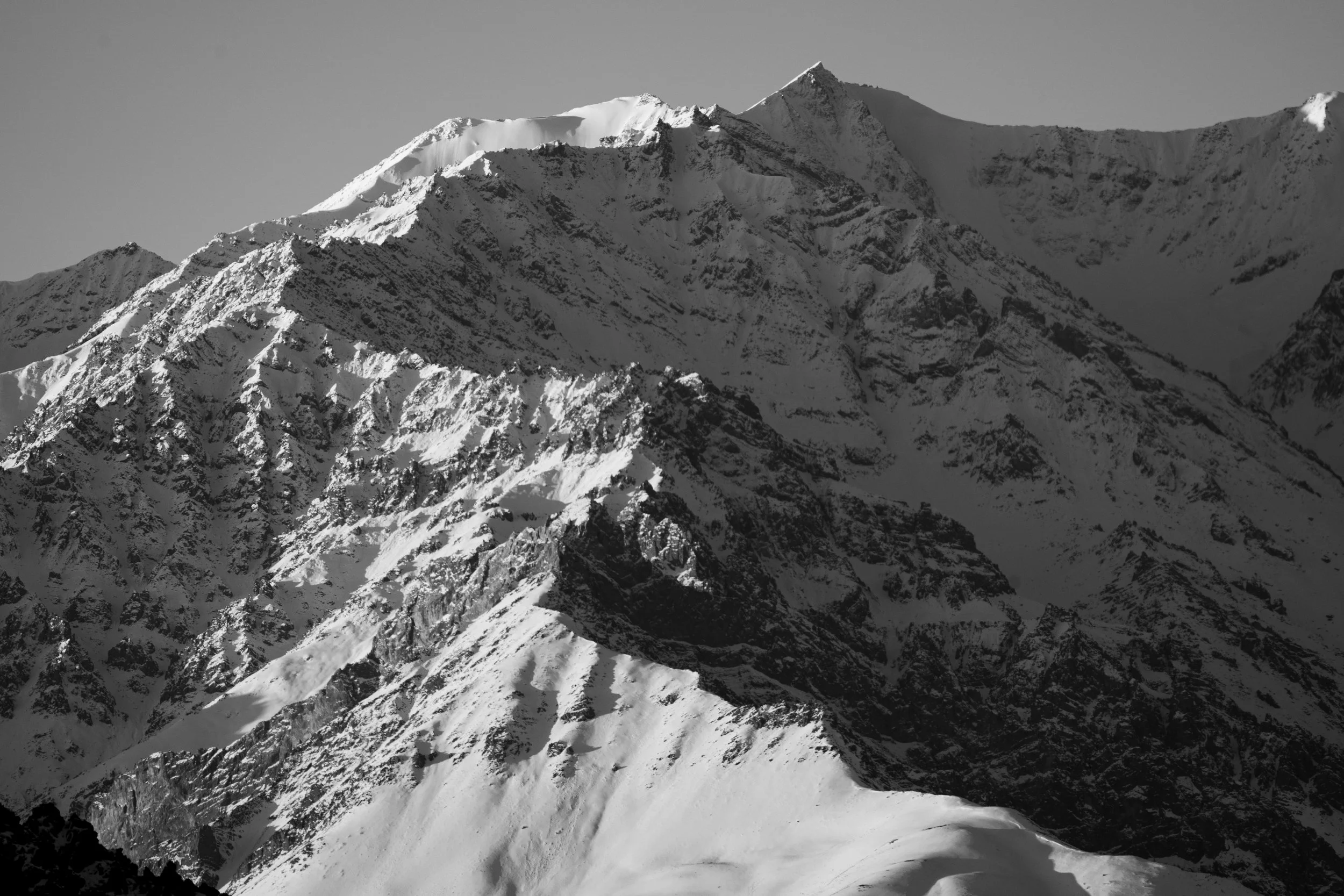
The week is a success, not just for our sightings – of which we have two separate sightings over the week – but also for where we are. At first glance, the barren climes of this unknown region are unwelcoming and unforgiving; it is with time though that they soften, it is with time that your eyes adapt to the hidden secrets, it is with time that your brain slows to the Himalayan headspace that is Ladakh and all it has to offer.
Returning to civilisation from remote regions such as this is bizarre at the best of times. Amidst the beginning of the Covid ’19 lockdown however is even stranger. In hindsight, this was only the beginning and few knew the extent to which the world would close for business. As we transferred back through towns and airports from the remote north to the frenetic climes of Delhi, the ‘covid paranoia’ was starting to descend. Within a week or so of being back in the UK, full lockdown had begun.
These are strange times for everyone. Will the world recover? Do we really want the world to recover?
The natural world has seen a brief respite from us plundering its resources, yet whilst some areas recover, others are plundered deeper. Poaching is now rife and tourism jobs on the ground are left in tatters. Now is the time to take stock. Now is the time to change. But will we?
We have been given a unique opportunity as the human race, an opportunity to implement change, an opportunity to make the world a better place before it is too late. Whilst Covid’19 is most obviously a ghastly pandemic, it has afforded us a brief insight into how we can save our planet, how we can embrace our natural world, and how we can improve as the human race. It really is that simple at the end of the day.