
TCHAD
November 2023
‘Ennedi – Northern Deserts’
It’s the smells and the heat that always hit me first. The plane doors open and bang, right in the face. I love it, it’s Africa and it makes me feel that sense of home and adventure all at once. A slight trepidation, a mystery, a chance to be back here once again waiting for the weeks ahead to unfold.
It’s N’Djamena this time and Chad. I’ve been to Chad once before but this time we are heading further north and up to the desert and Ennedi, I’m excited for this one. There’s something about it, the allure, the unknown, the nomadic life, it’s all to play for.
Yep, Chad is not known for being the safest place in the world but working with the right people in the right place, we should be fine. Immigration is the first port of call, always a sense of intrepidation, are my papers in the right working order, is the visa ok, will my yellow fever certificate be…oh nope…they don’t even ask for it, all good this time!
La Residence -nowadays it’s the hotel, it’s not the newest or the flashiest, but it’s the place to stay. Two pools, a good restaurant, clean sheets and sometimes (not on the first morning), even running water. It’s nice to be back, to feel like im in the real Africa again, not an Africa that has been sterilised over and over from years of tourism, but a true, real, live Africa, that is hot and dusty and frayed around the edges. I sit on my balcony – once I’ve made my way past the security shutters – and enjoy a typically British cup of tea whilst the street life passes by below me. N’Djamena has its problems, Chad has its problems, but there is something warming in the true African city, something real, something heart-warming, something that makes you feel at once comforted and on edge at the same time. As for the pigeons, that seem to love my balcony, I soon realise why, as I look up behind my head at the air conditioning unit hanging out of the wall, and a nest of twigs and scrub hanging down just in sight. Pigeons, waiting for my departure, eyeing me patiently as I finish my tea.
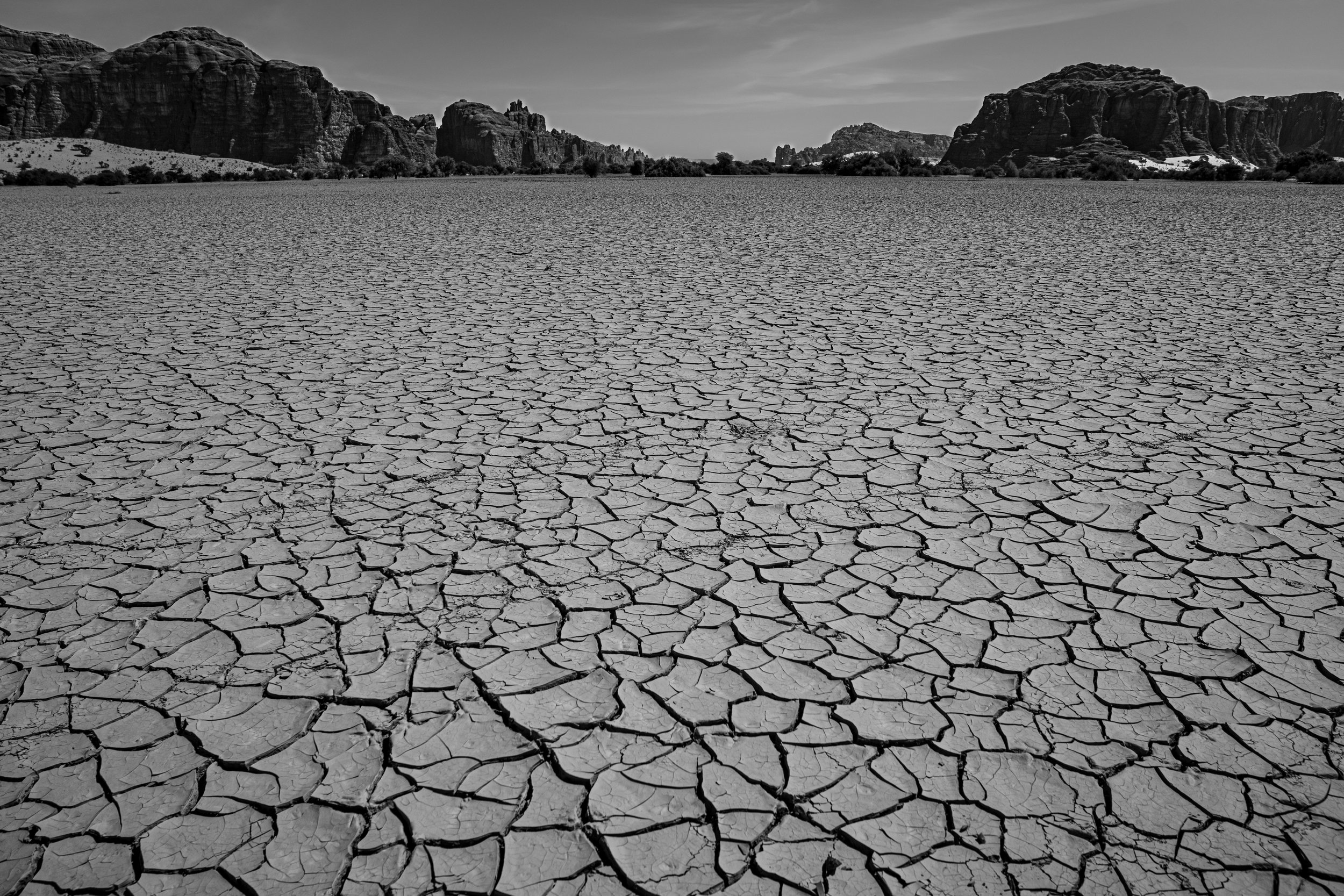
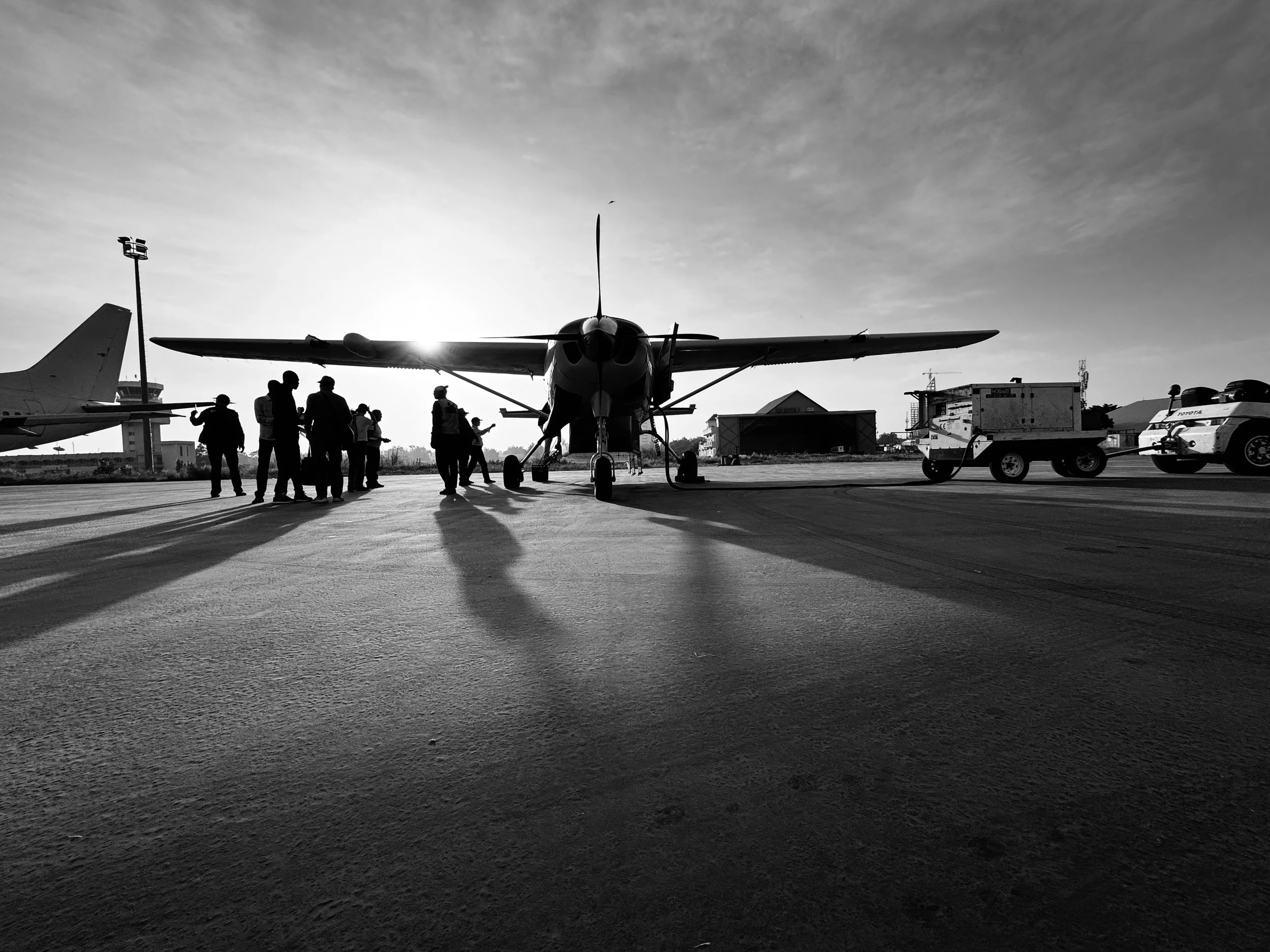
It's hot, its crunching under my foot, but it is absolutely fucking stunning. We are on the clay encrusted airstrip, we are in Ennedi. A 3hr flight north of N’Djamena we started early this morning with a 5min hop to the airport. 0630hrs we were already all checked in. 0715hrs we were in the sky. A 12-seater Caravan – minus 3 seats as we needed the spare weight capacity – piloted by Angus the somewhat chirpy white Kenyan who impressed on us to go for a pee now before we are sealed in, and we are off. It’s a smooth flight, slowly losing the dusty city streets of N’Djamena behind with the deserts of the north slowly opening up ahead. The time goes by, and the scenes slowly unfold below, small homesteads, desert landscapes, and then only minutes before we arrive, the mind-blowing Massif of Ennedi. Vast sandstone outcrops tower out of the desert floor, eroded from millennia of wind and water. Angus does one quick fly-by of the clay cracked airstrip, just in case of unsuspecting nomads, camels or more. Then with barely a jolt, we deftly land on the clay cracked strip of Ennedi. 4x4’s race up to the plane, scarf shrouded faces welcoming us under the desert baked sun as we are whisked off into he desert scapes and onto the welcoming Camp of Warda.
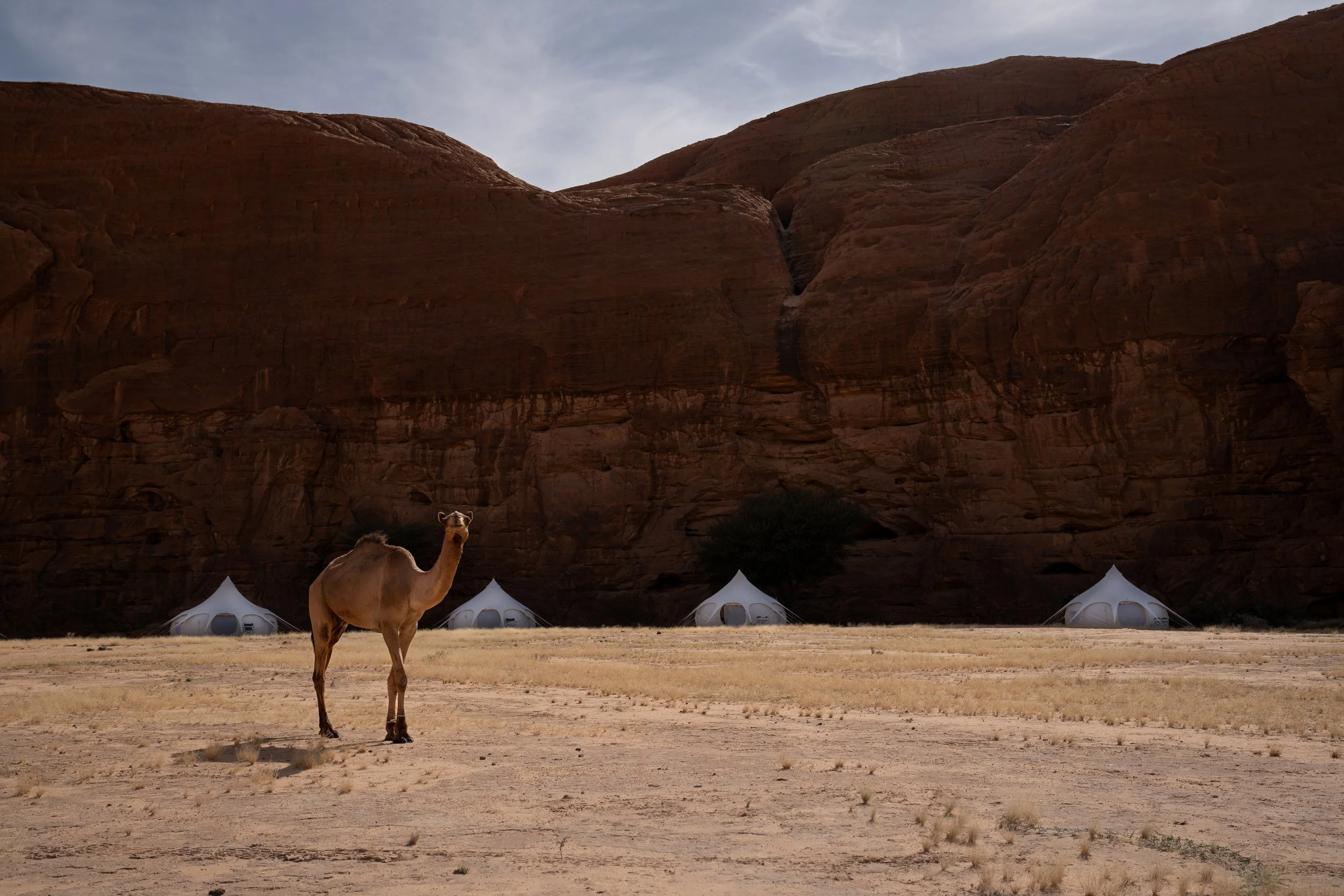
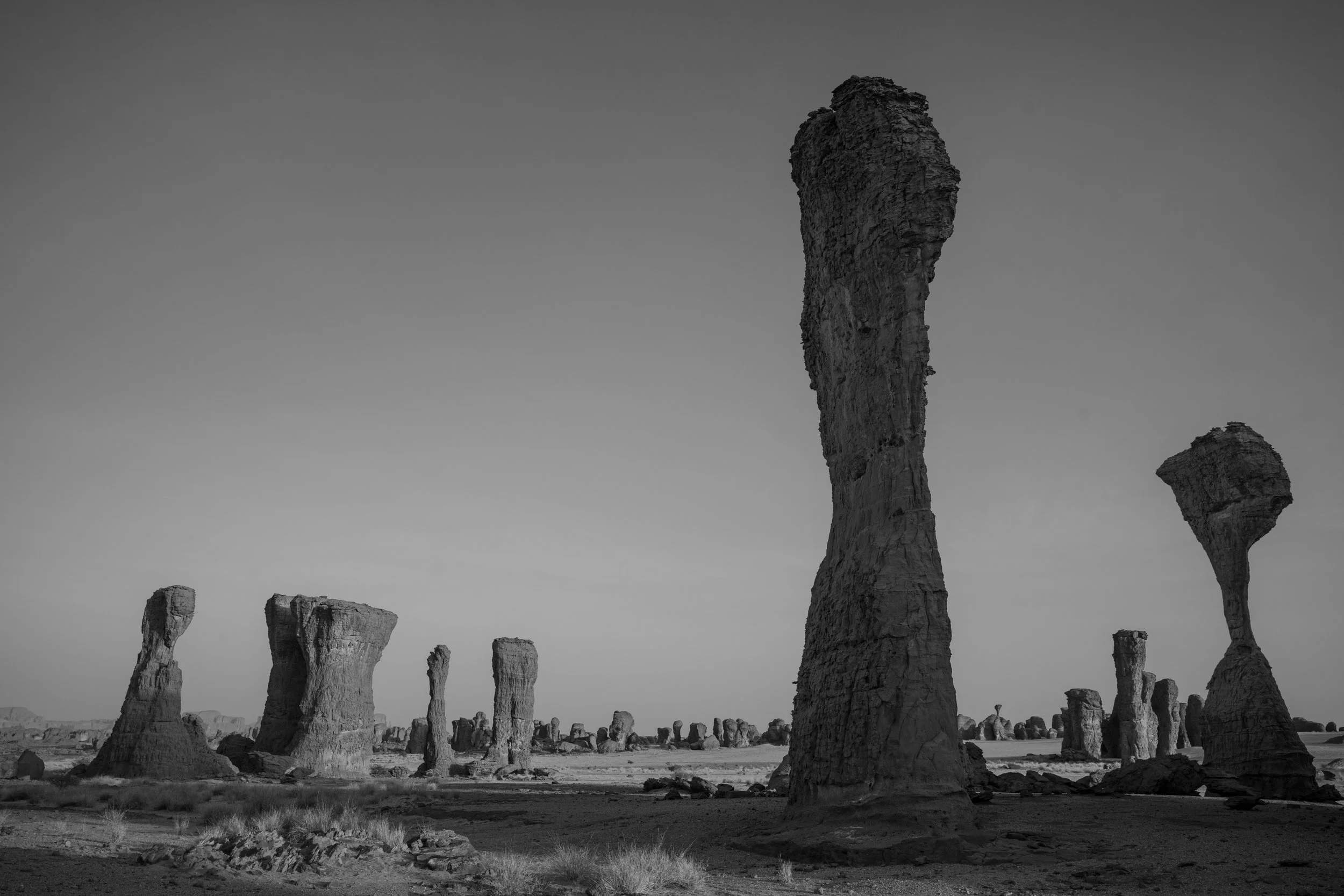
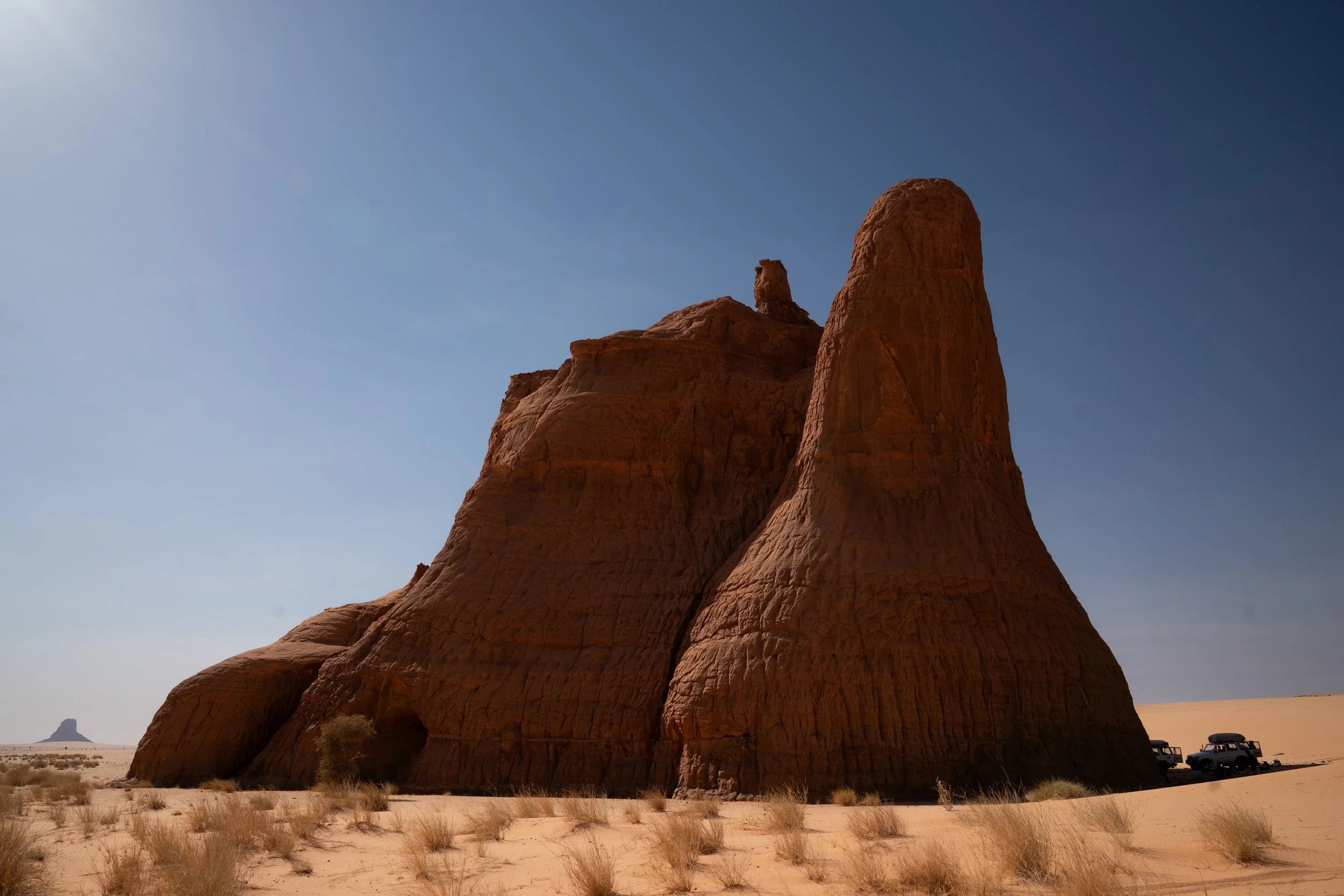
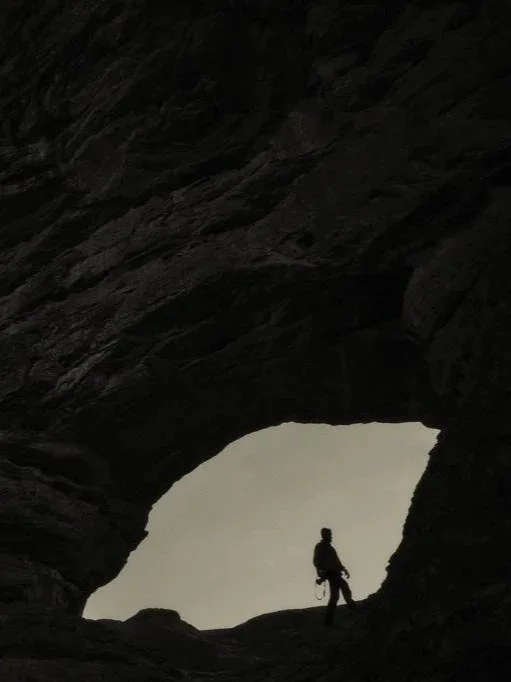
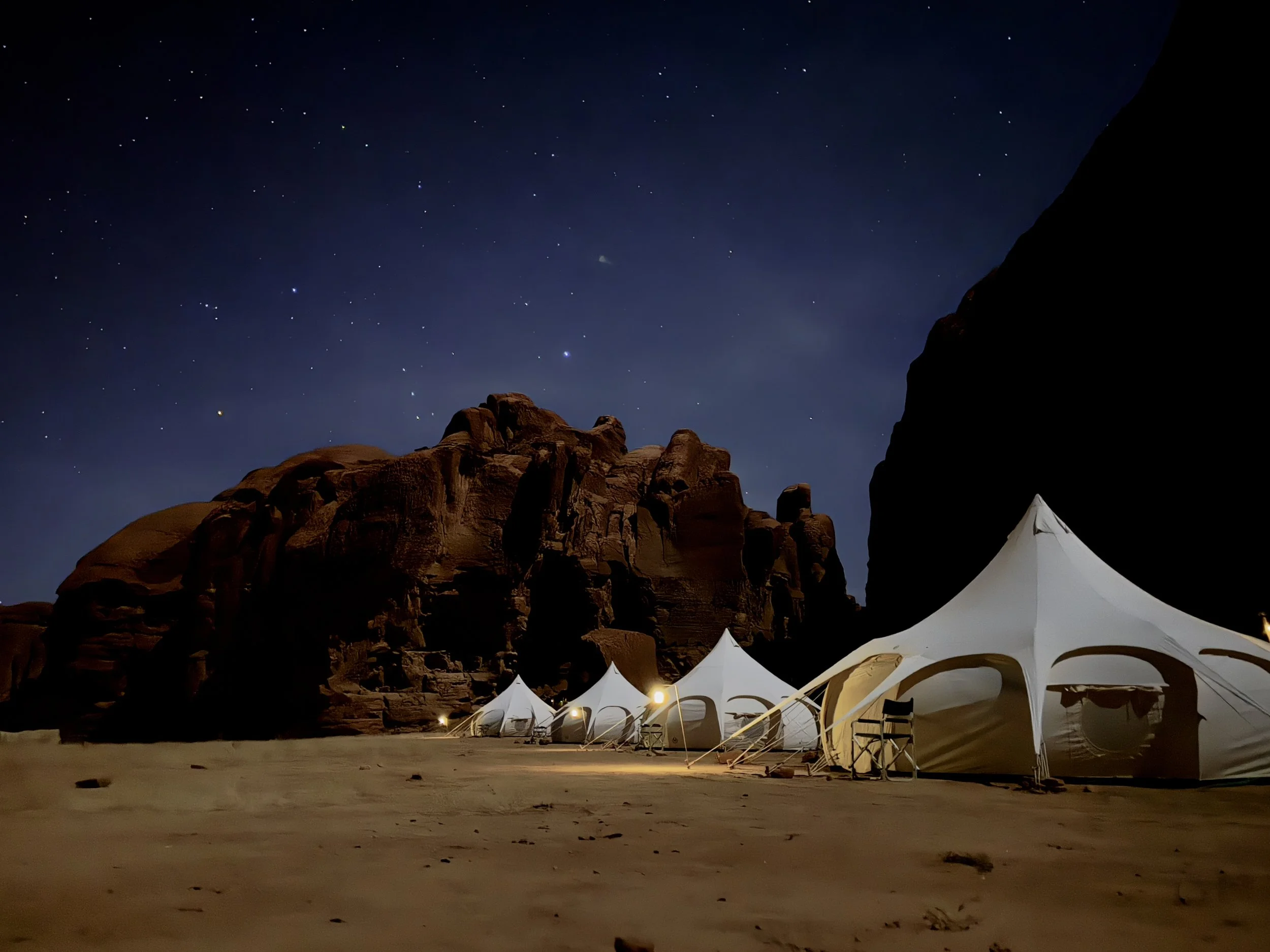
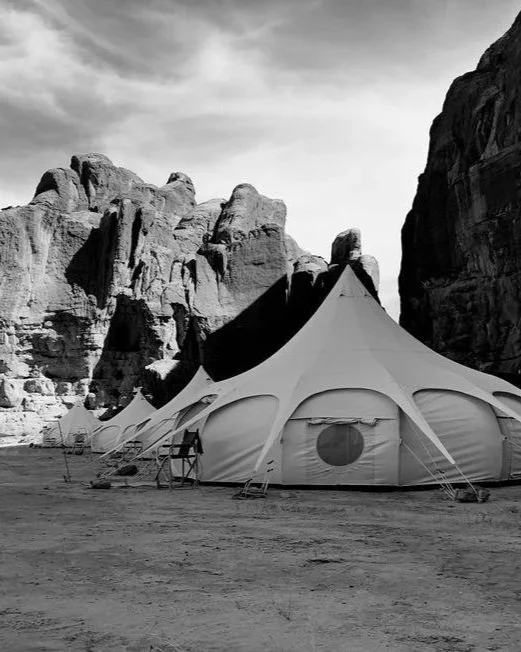
Stunning. There are few destinations that I have travelled to in recent years that really have taken me back to such an extent. Maybe the Makay in Madagascar, maybe the frozen fjords of Eastern Greenland. I don’t know, but this vast scape is one to behold. The Camp itself is set almost in a basin like amphitheatre of sandstone cliffs, the 8 individual bell tents set to a backdrop of red, their white outline set off against the stark rouge of the Tchadian desert-scape. We are surrounded by vast monolithic rock structures, individual towers, gaping eroded mouths of caves, archways and more. We walk, we explore, we wonder, we wander so long, we forget the time. We are late, we are lost but find our way, we are at home in the desert, one of a few, but alone to enjoy.
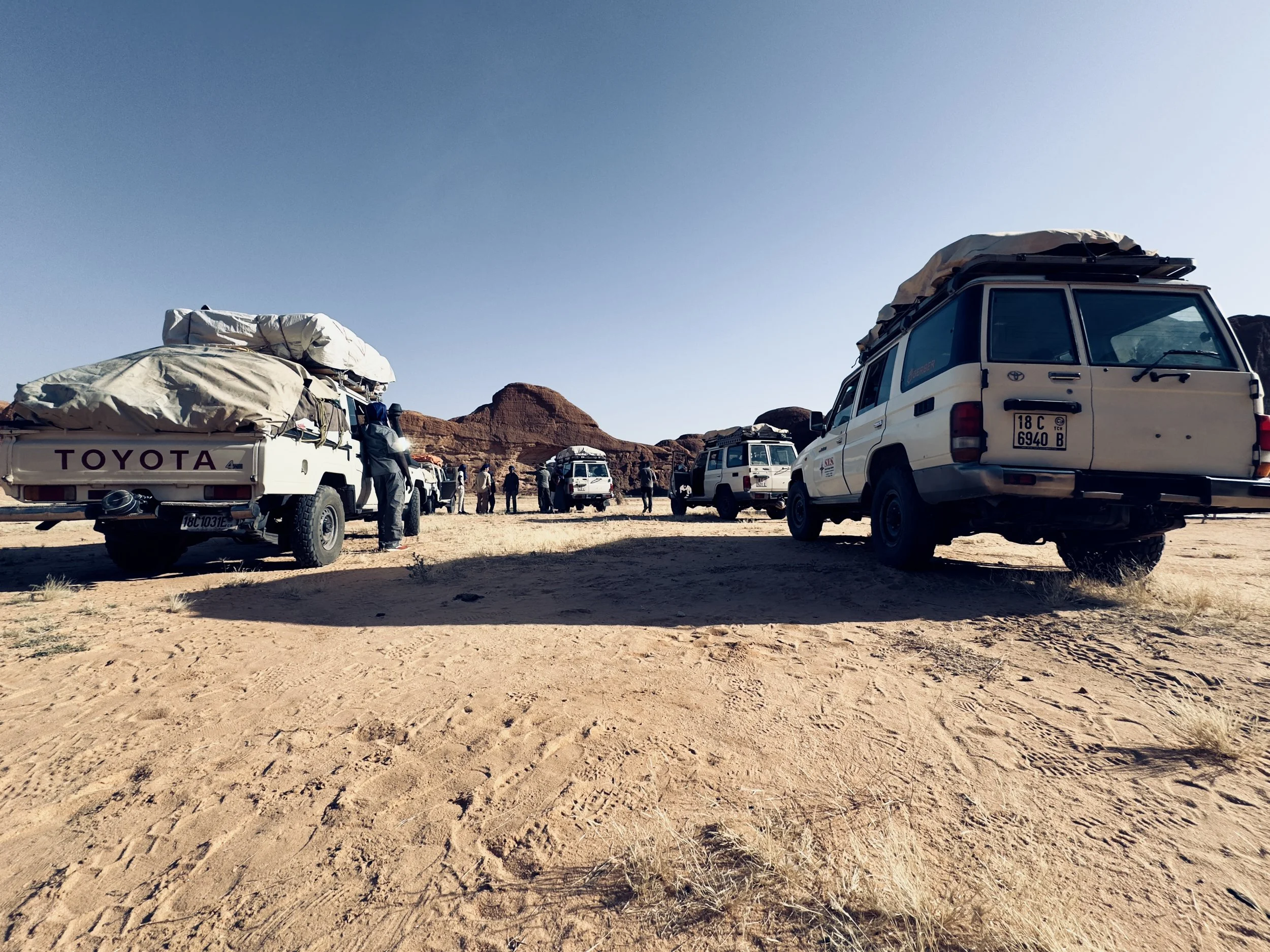
Our first full day. We set off early Land Cruiser laden, a convoy of 4. Our guides have – Rocco and Tomasso – have breathed this corner of desert for years, passed down from their father, Italian nomad’s of Tchad. We drive, the sandstone massif throws up shape and form at every turn, rock arches, boulders, labyrinths and more. Across the scrubland desert for hours, past nomad villages made up of a house or two at most, rattan fences, weaved thatch, all ready to be broken down at a moment’s notice or a season’s end.
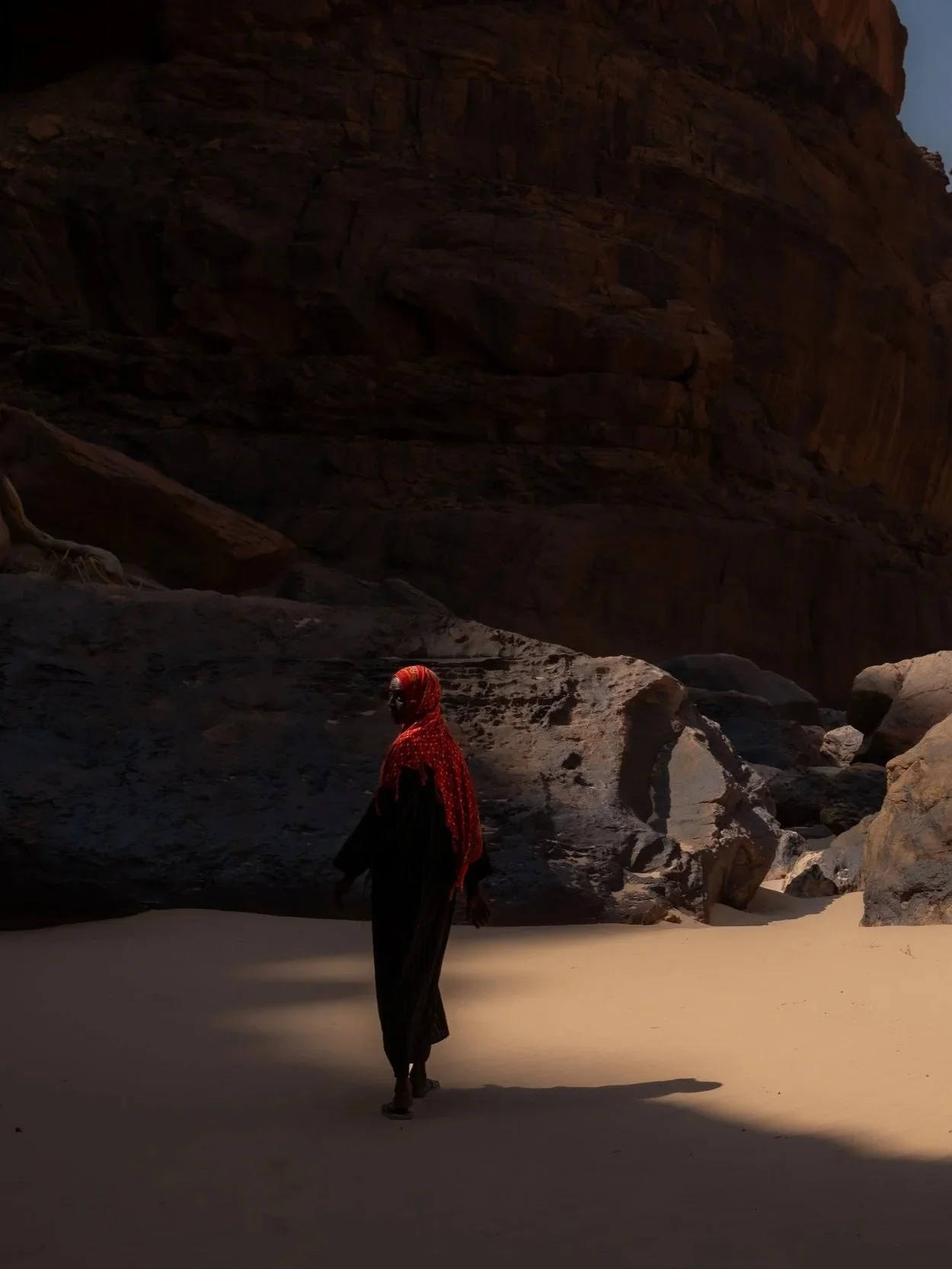
We arrive at our destination, the first Guelta (similar to an oasis) of Ennedi. A riverine channel surrounded by sandstone high cliffs, green palms abutting the red backed cliff lines as camels come to drink. This is something special, truly unique, we walk the channel, brushing past palm fronds, camels slurping their body weight in water, their nomadic herders watching us inquisitively as we wander by. Inquisitive looks, but if I’m honest, not the most welcoming, suspicious of our western ways and definitely not keen on cameras. We ask why and it appears that the herders are nervous as their camels are all branded for ownership and camel rustling is a large part of the way of their life here…so cameras are not the flavour of the month. The politics of the Guelta intrigues me more so, with each clan (different to a tribe as not such a hierarchical set up) is allocated a day of the week when they can bring their camels to water, this is to avoid mixing of herds and ensure all clans get sufficient watering rights.
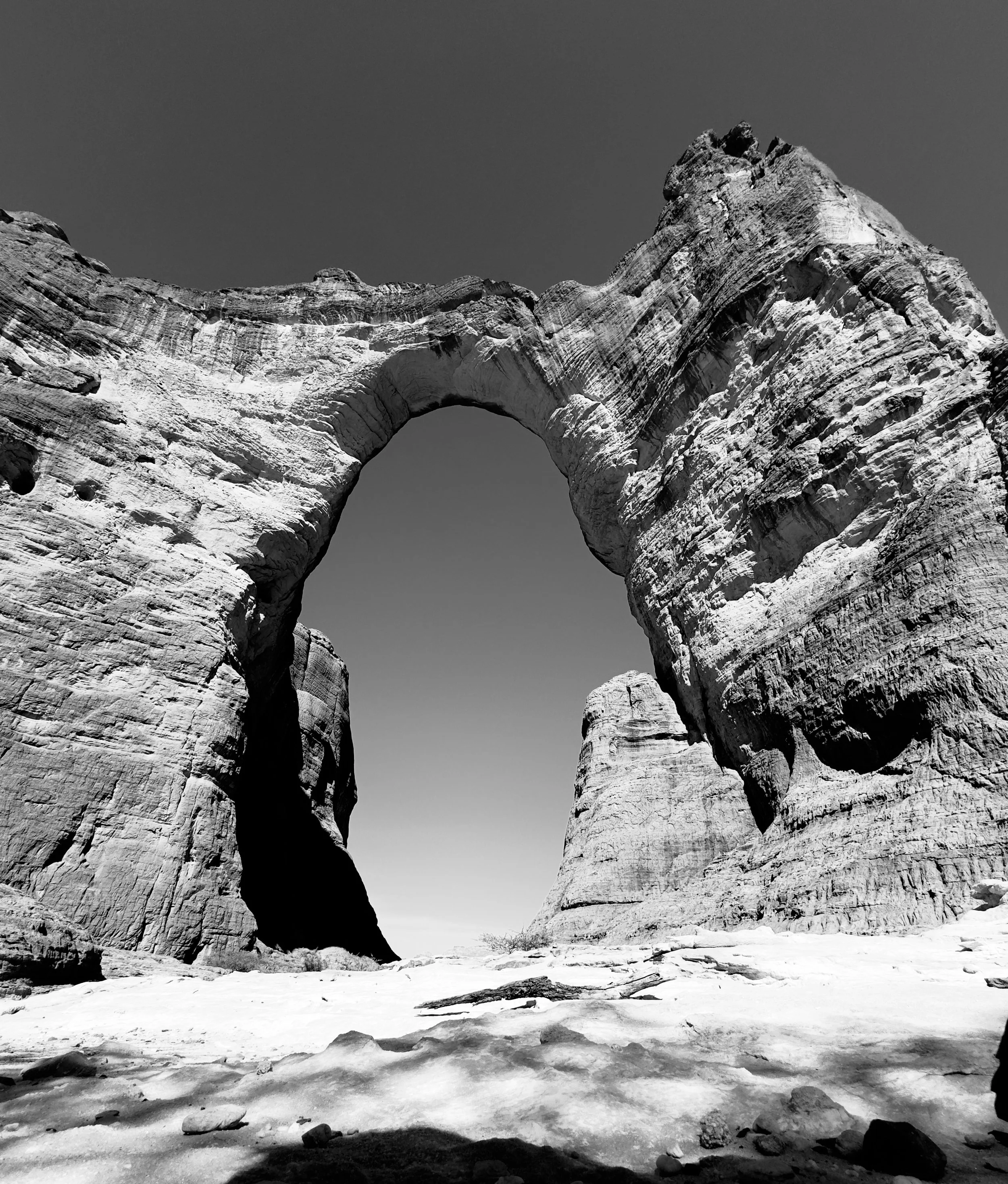
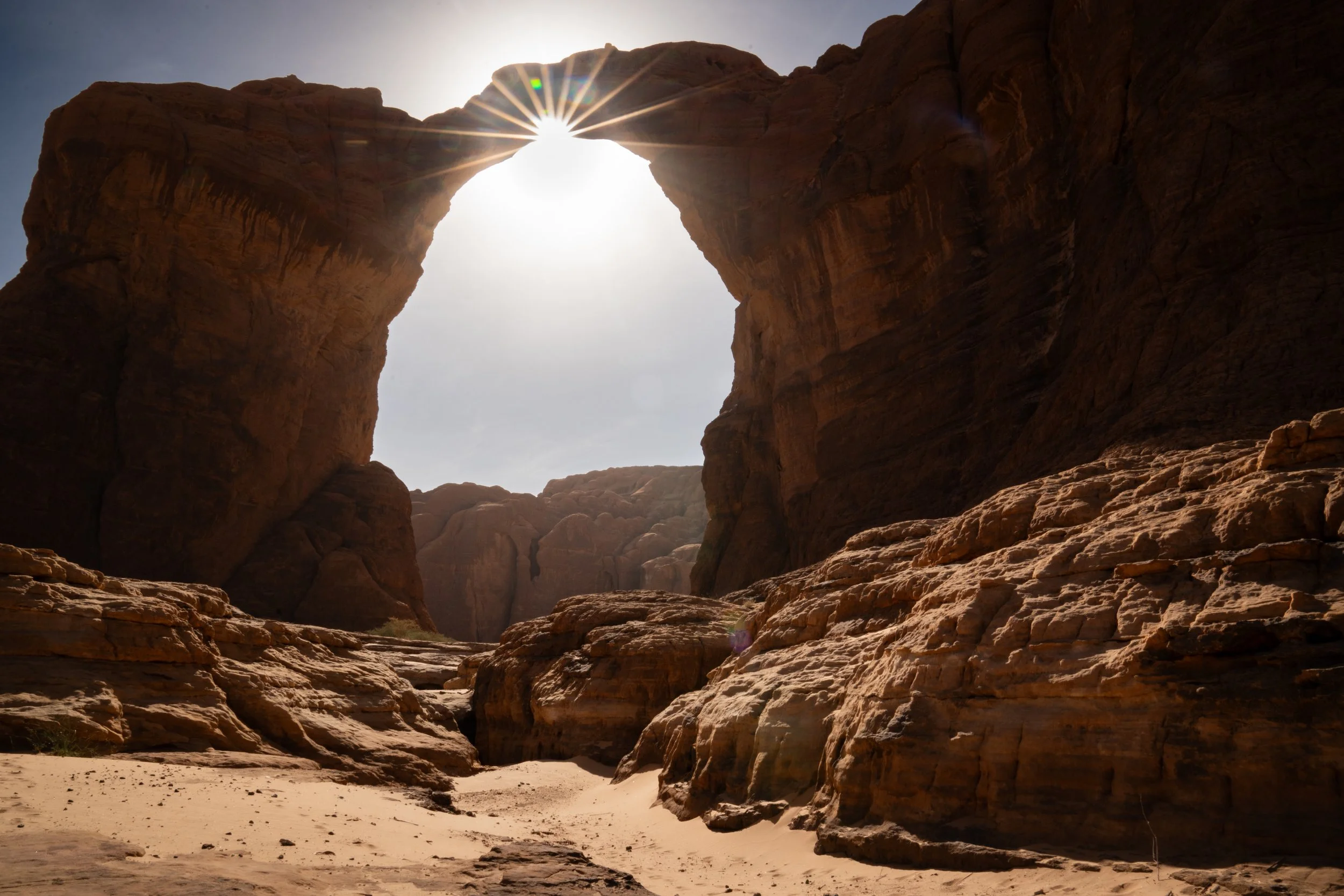
We move on leaving this hidden oasis behind and set off across the desert, dust puffing up from the tyres as we bounce through this frontier land. Our next treat is lunch, under a 127m high archway, completely unsuspecting to the eye rising dramatically out of the rocky surrounds looping through the sky, a rock like rainbow archway. Our day carries on from breath-taking view to the next. Slowly the day softens, people make a retreat back to Camp as Alisdair (Taylor-Young) and I stay out to catch the remaining light, stopping off as and when, beer in hand, soaking up what the desert presents.
Camp life is laid back. Bell tents, bush showers, lantern lit at best. The backdrop of sandstone provides a security blanket. Sleeps are long and restful, mornings are early and warm as the sandstone surrounds act like the natural radiators that they are.
Today comprises of a ravine walk to see the last remaining crocodiles of Ennedi, 3 females ancestors from millennia ago when this place was green like Kenya says our guide and friend Tomassi. These solitary crocodiles now remain trapped in this limited ravine, eating on tilapia and seeing out their days, no hope of reproduction on the horizon. Rock art is next, of 6,000 years of age, cows, camels, ochre hewn into the rocks 30ft high from the desert floor, chapel like in their situ.
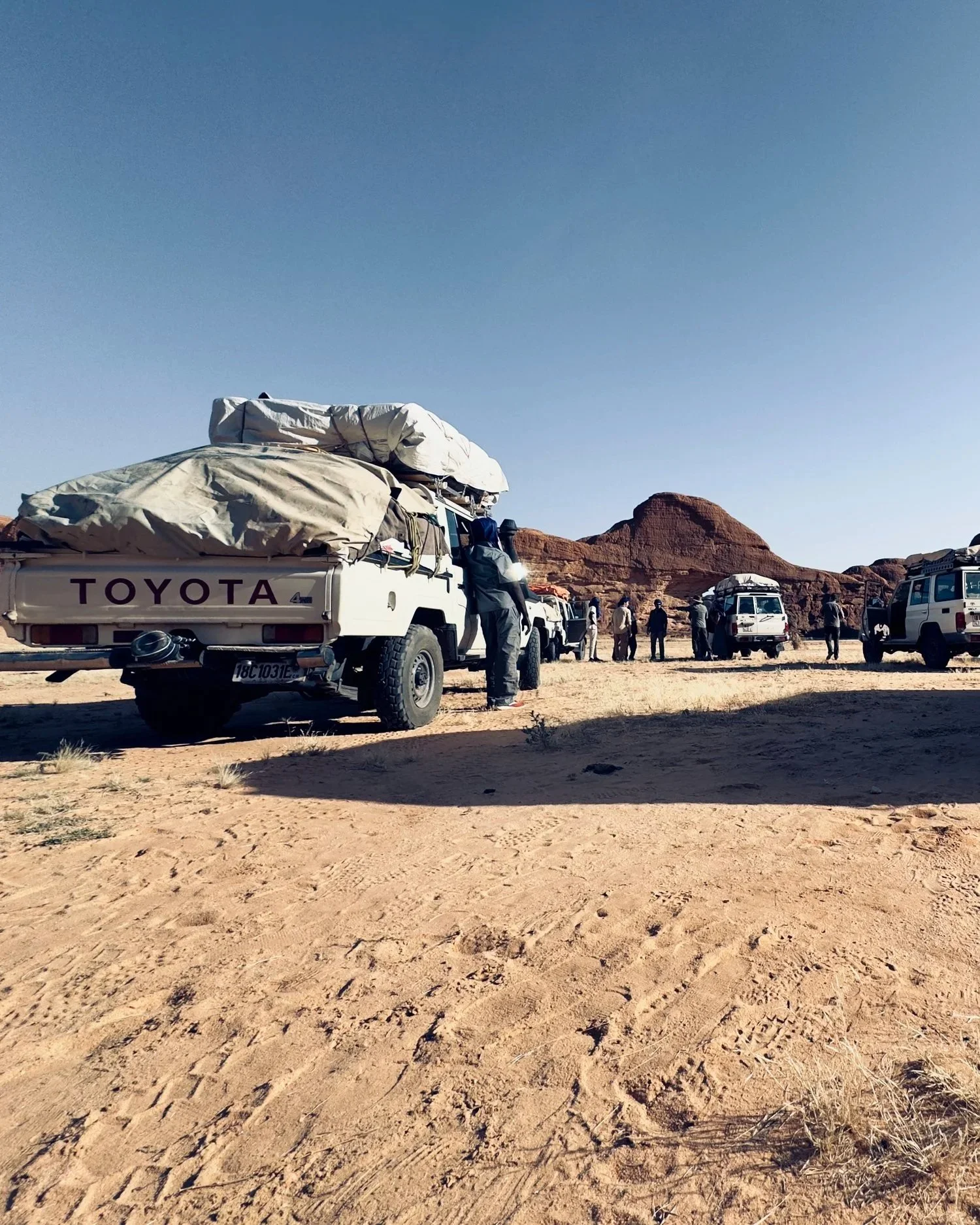
Today the journey within a journey. We set off early having packed Camp and left the basic infrastructure behind. A change of clothes and the bare necessities and our mini expedition begins. North west exploring, heading out for two days of fly camping, remote and wild. Our convoy of Hilix winds its way into the drier north, thru sporadic houses, herders as the lands widen into an open embrace.
The people here are hard, not welcoming, untrusting and suspicious. Photos are not welcome and even a friendly smile or gesture is batted away with hard cold eyes.
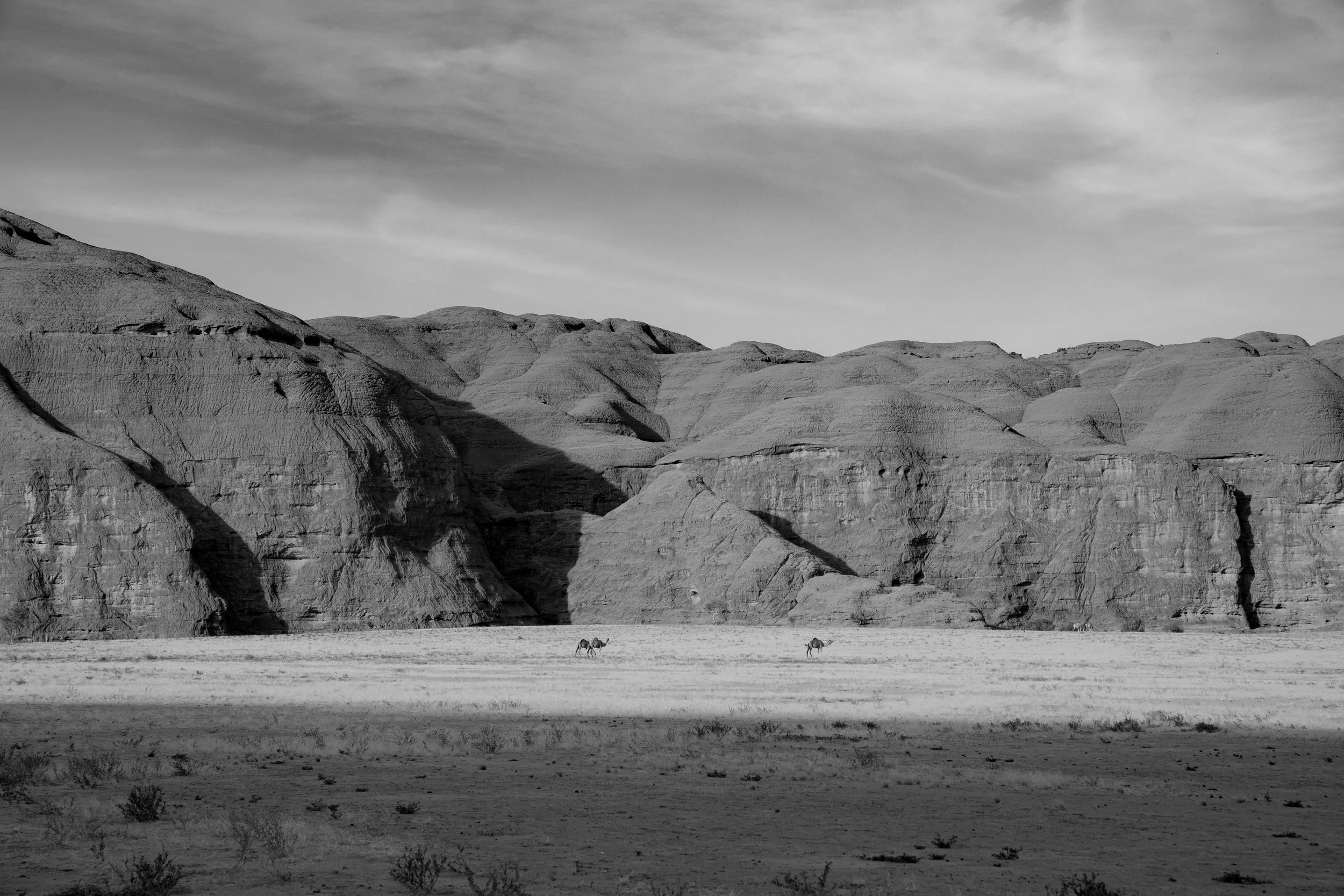
A day of dust and tracks, weaving through rocky outcrops opening into dramatic desert plains dotted with camels and nomads making their way.
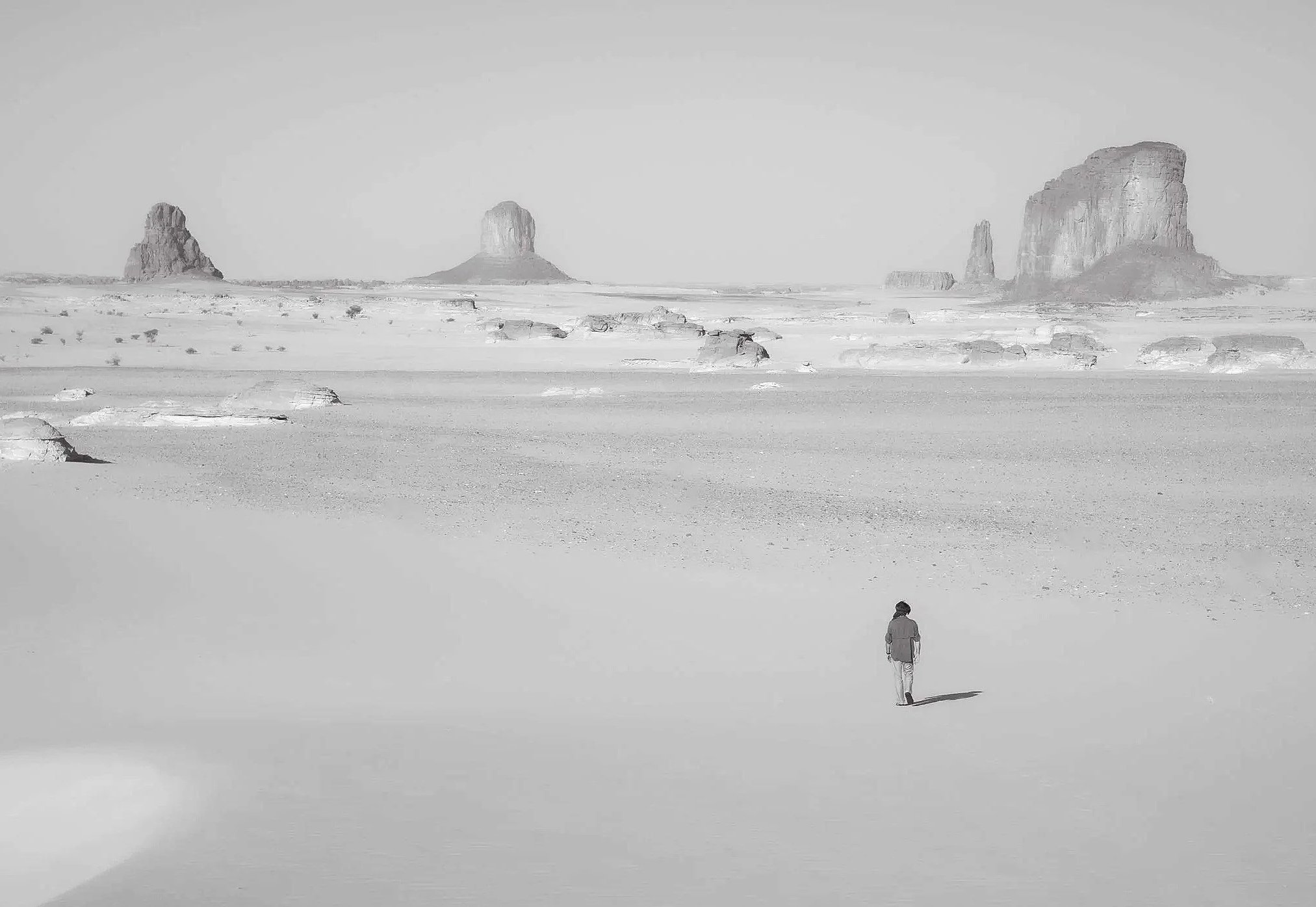
The night is spent under the stars with a dune to our backs looking to over the rocky desert below dotted with monoliths as far as the horizon. A bed, a mattress, a sleeping bag and a tent is my comfort for the night. I chose to sleep under the stars the tent for just my bag. It’s quiet and still, the wind picking up blowing in my face as the stars light the night sky. 2 shooting stars pierce the night sky sharp and bright fading into the desert horizon.
I sleep ok, awake for the early hours and drifting off again as the darkness lifts. Ablutions behind a dune typically as the only car for hundreds of miles around grinds its way up the rocky desert towards me. It’s these moments when you think twice, a Toyota Hilux with turbaned men in the back AK47’s strapped to their backs. For a moment my mind races, this region has had its fair share of issues when it comes to kidnapping and instability. Thankfully they drive on past, on questioning my guide Rocco he reassures me they are friend not foe, Tchad military patrolling the region. This place is home to war and conflict, not far from the Libyan border; military in Tchad is renowned for its strength and prowess.
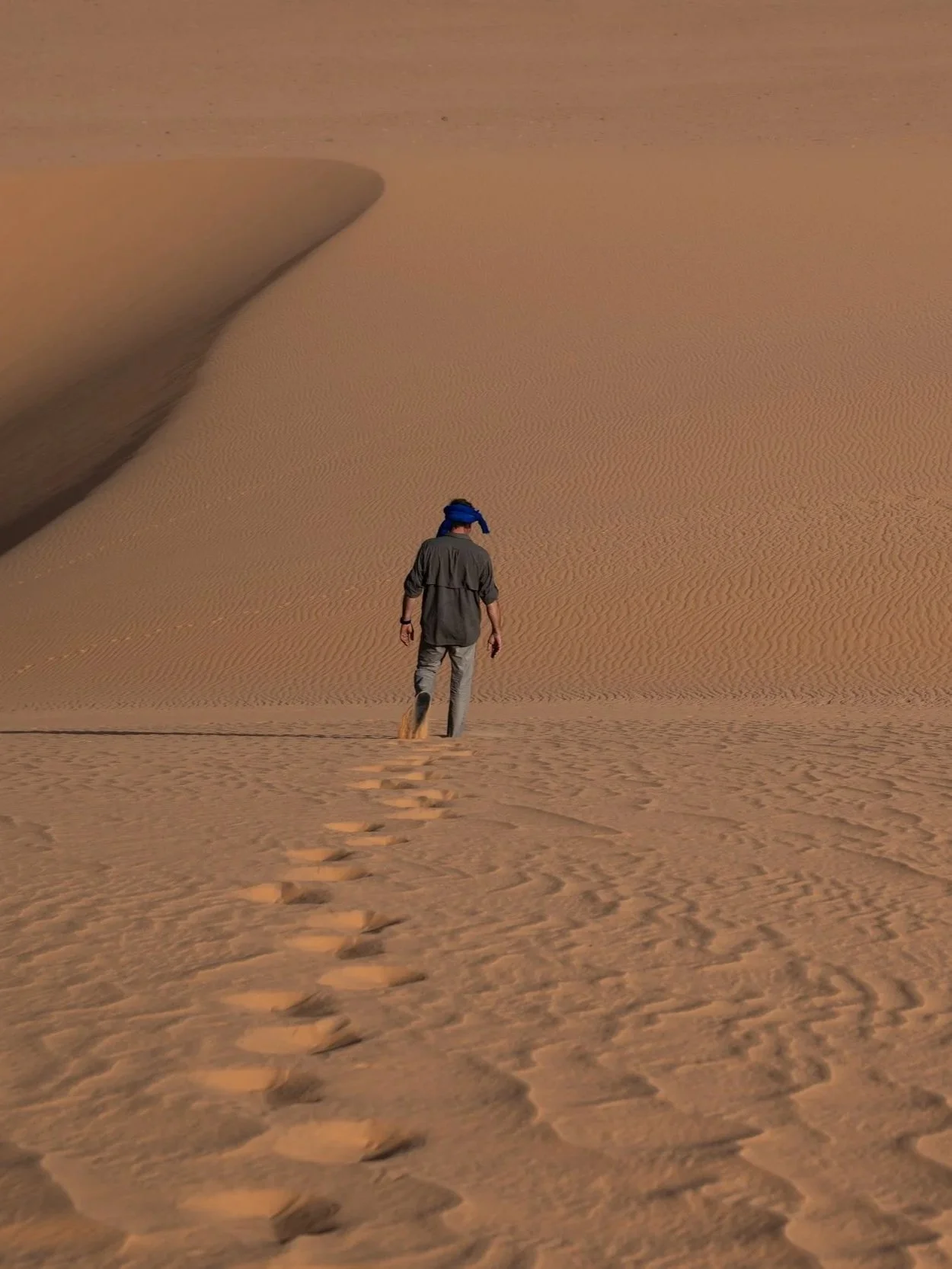
The morning starts with a walk, an hr or so. I tag on alongside Rocco who walks with years of ease - in his flip flops - through the desert terrain as we stumble in his wake in our western gear. We get chatting, he’s a humble guy, quiet in his own right but keen to educate and chat. We talk Tchad, where we are, Tchad economics, past history of what works what doesn’t, family life. Rocco recounts now what I refer to as the ‘Venezuela Story’. The West African Coast is used as a landing point for drugs - heroine and cocaine - coming in from Latin America, where it is then transported up through the desert and out into Europe. This particular story involves a DC-10 aircraft landing on a DIY airstrip created in the Mali Desert. 150 souped up V6 Toyota pick-ups sit waiting alongside the airstrip. They are loaded with the drugs and set off in a spider web of directions into the desert and up to Europe and beyond. The two pilots have requested a helicopter for their onward journey, set fire to the DC-10 and go.
With this in mind we continue our journey north to the border of Ennedi, passing through dunes, unsuspecting camels surprised at our ragtag convoy. The twisted metal debris is the first signs that something happened here, smooth to the touch and shiny in the sun, it is the remains of the Libyan army Tommasso explains. This was the army that invaded Tchad in 1981 in the hope of finding oil reserves within the northern territories of Tchad. The Libyan army did not last though, equipped in tanks that got bogged in the sand, with temperatures rising to 50C inside, the Libyan soldiers soon abandoned their metal coffins, only to be mown down by Tchadian soldiers in Toyota Hilux mounted with heavy artillery on the back. Stone outlines mark the graves of the soldiers now, with tanks half submerged in heavy sand dunes, guns pointing into an empty sky, a sad story that took place in the middle of nothing but cost many lives and ultimately the demise of the Libyan invasion losing 500 tanks to desert and Tchadian fierté. It was in this battle that we see more evidence of the fire and resolve of the Toubou people that inhabit this region; hard on the casual traveller, they were even harder to an enemy invading force, proud, strong and unwavering in the protection of their sand kingdom and natural heritage. It’s a privilege for us to be able to access such a site that few get to visit, touching the hot metal that has rested twisted and baked in the hot desert son for nearly 40 years imagining the individual stories and tragedies that must have unfolded here. Each tank, each grave telling a different story, a different battle, a deiffernet demise; one such tank we are warned not to go near, our local Toubou expert spotting the subtle tracks of a snake entering the tank, a large viper curled up in its metal home, deadly to the unsuspecting historical enthusiast.
Our journey moves on, leaving the battlefield behind, turning and starting our journey back south. The vistas vary from hour to hour, open deserts, rocky outcrops, stunning phallic like monolithic towers pointing skyward out of the scorched dry sand. Our evening campsite is set amongst what can only be described as a Monument Valley on steroids, towers of rock reaching 50m into the sky, archways, fingers pointing upwards, all shapes and sizes dotting the horizon as the moon rises and the light fades. I look up from my sleeping bag at the night sky, a monolithic tower reaching up into the night sky above, not many can have slept here, or ever will, it’s truly a privilege, and with that, I slowly drift off to sleep with the slow rumbling of my fellow travellers snores echoing through the desert surrounds.
160klms a day is a fair distance to cover through the desert sands, but that is what we cover over our mini expedition north and back. We enter back to Warda Camp for an early lunch on our final day, welcomed back to a table set in the shade of our rocky enclave, a cold beer in hand, reflecting on the adventures of the last few nights.
And with that, it is our last night, our last adventure in the desert embrace. This place has hit me harder than most, it’s not for everyone, but it is definitely for me. The remoteness, the harsh reality of the desert life, the sporadic green splashes of the Guelta’s, the signs of nomadic life that criss-cross the desert, maybe it is a romanticism that I have not really experienced before, or not in such intensity. It is different, it is real, it encourages slow travel, real travel, travel for what it always was. Don’t come here if you are expecting anything else as it is not for you.
The brothers need the praise. Without Rocco and Tommi Rava, this place would not come to life. You would-be lost in a barren sandpit unsure of where to go and what to do. The Rava’s bring this place to life with their hospitality, knowledge and charm. Their family has been here for coming on 50 years, their knowledge and passion passed down from their father, a doctor who was bitten by the desert bug on an overland journey back from Kenya to his home in Milan. Rocco himself has been on the harsher side of this region, being kidnapped (30 years ago now) by the wondering people of Tibesti. 2 weeks he walked with them, through the desert sands, camping out at night and understanding their way of life. Eventually rescued by the Tchadian army, Rocco swears this has given him an unparalleled understanding of this region now, contacts and connections that smooth the way, an understanding that this unassuming white man of the desert holds more than at first meets the eye.