
RWANDA
November 2023
‘Rhino Wrangling’
So about last week. I went rhino wrangling.
I’ve travelled and seen a lot over the last 20 years, but this was a new one for me. Darting and tagging rhino.
Through our partnership with African Parks Conservation, I had the privilege of working with two of our loyal clients and travel to Akagera National Park in Rwanda to work behind the scenes for the best part of a week. Funded and supported primarily by our dedicated clients and part by Natural World Safaris, the funds went directly into this bespoke project.
A short flight from London Heathrow direct to Kigali, Rwanda, where we pick up our film guy and friend, Dan, and make our way south, a quick 3hr drive to Akagera. It is not a well-known par, in fact it is probably only the second or third park in Rwanda that draws tourist, but it is a beacon of hope in the heat of Africa when it comes to frontline wildlife and conservation. I was trying to work it out, last time I was here it was about 20years ago, that makes it around 2002 or 2003…quite a time ago now. Back then there was only a handful of giraffes, no rhino, no big cats to speak of and the park was primarily a cattle grazing area for the surrounding communities. Things have changed in the last 20 years. African Parks Conservation took the park on just over 10 years ago now in partnership with the Rwandan Government, and it shows. Lion, 30+ rhinos, a growing population of elephants, one of the largest resident leopard populations on the continent, bird life and a backdrop to boot.
It's only a short stay, 4 nights or so, based from Ruzizi Tented Camp, but it is packed full. Set on the placid lake shores of Ihema, Ruzizi Tented Camp is a comfortable mid-range set up, that offers everything you need at the end of a day rhino wrangling.
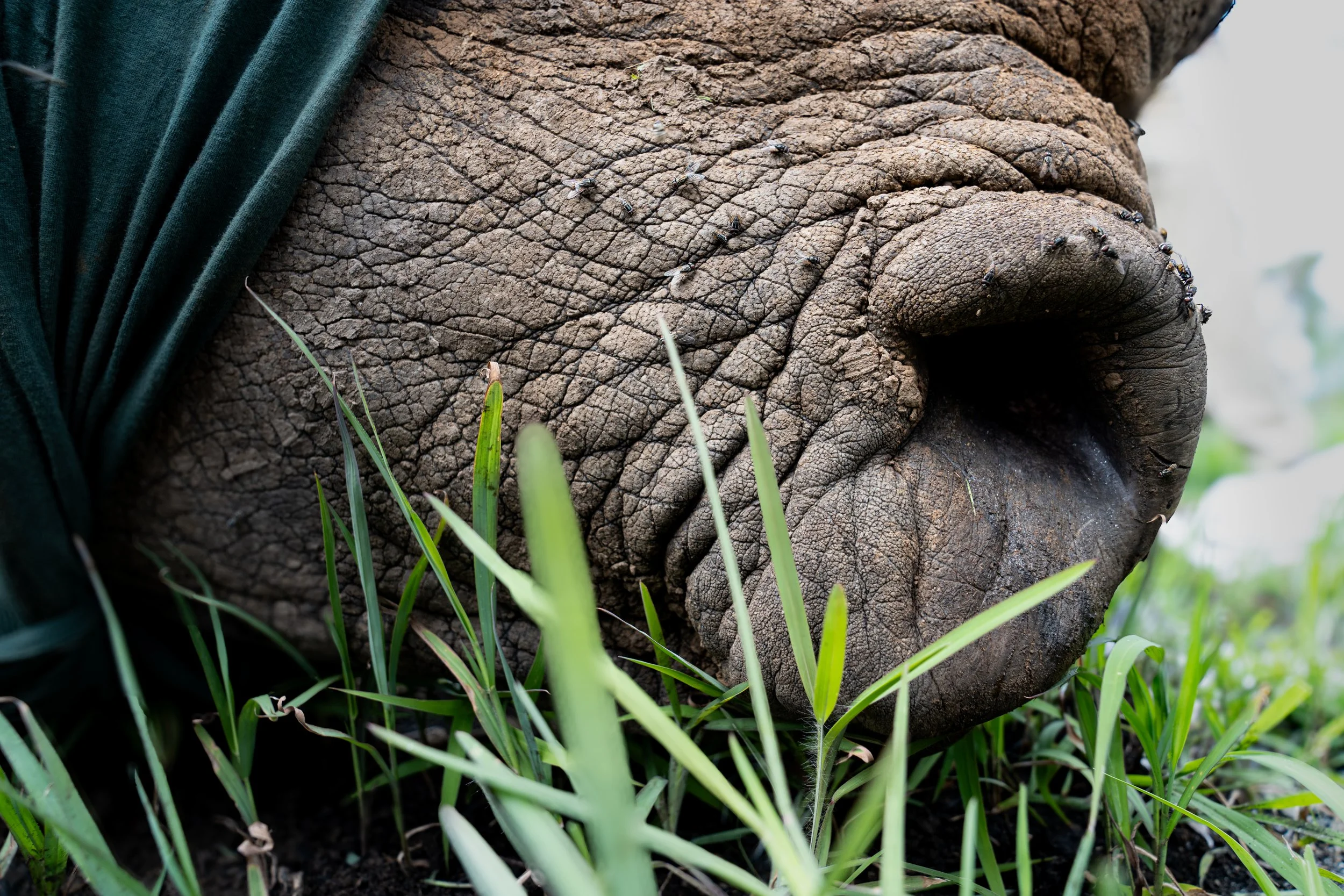
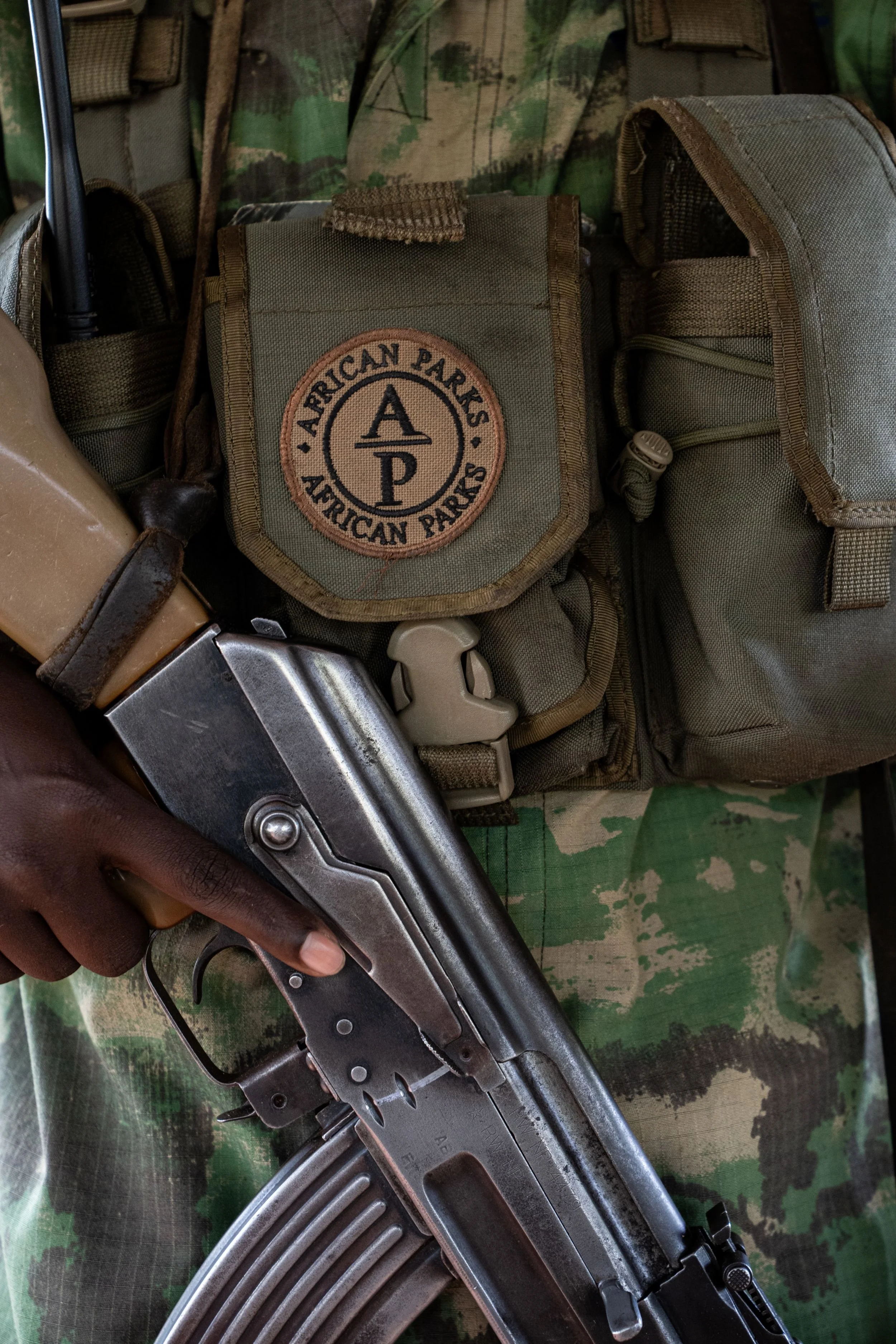
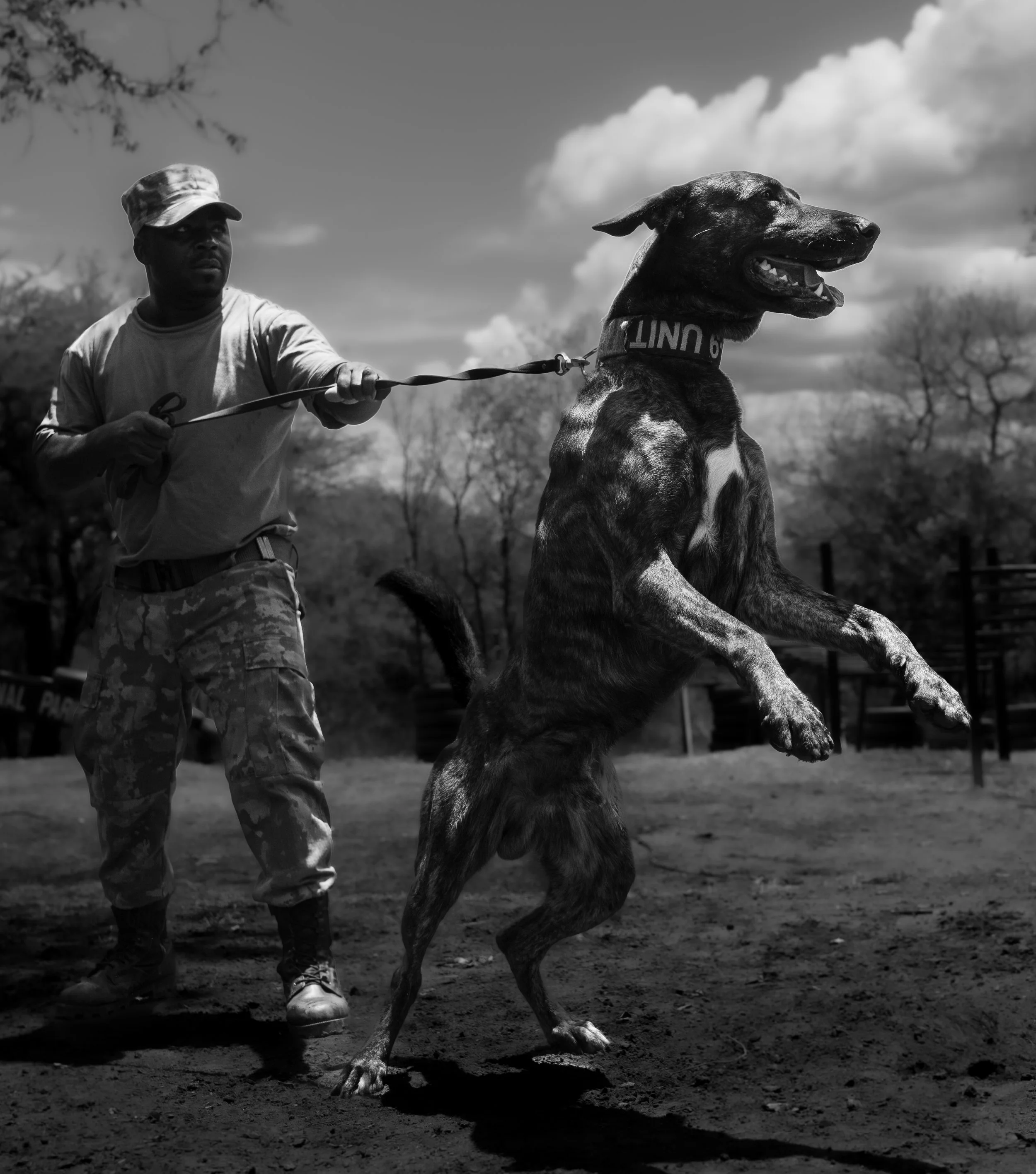
Direct from the airport we are met and head straight to the Park headquarters where we are shown the inner workings of the park infrastructure; the control centre, the classrooms for training, the K9 dog unit used for anti-poaching and more, we see thousands of snares that have been confiscated over the years piled up in the compound, and we meet are team for the next few days. Drew Akagera NP Director, Harvey the vet who is fundamental to our efforts over the next few days, and the tracking team.
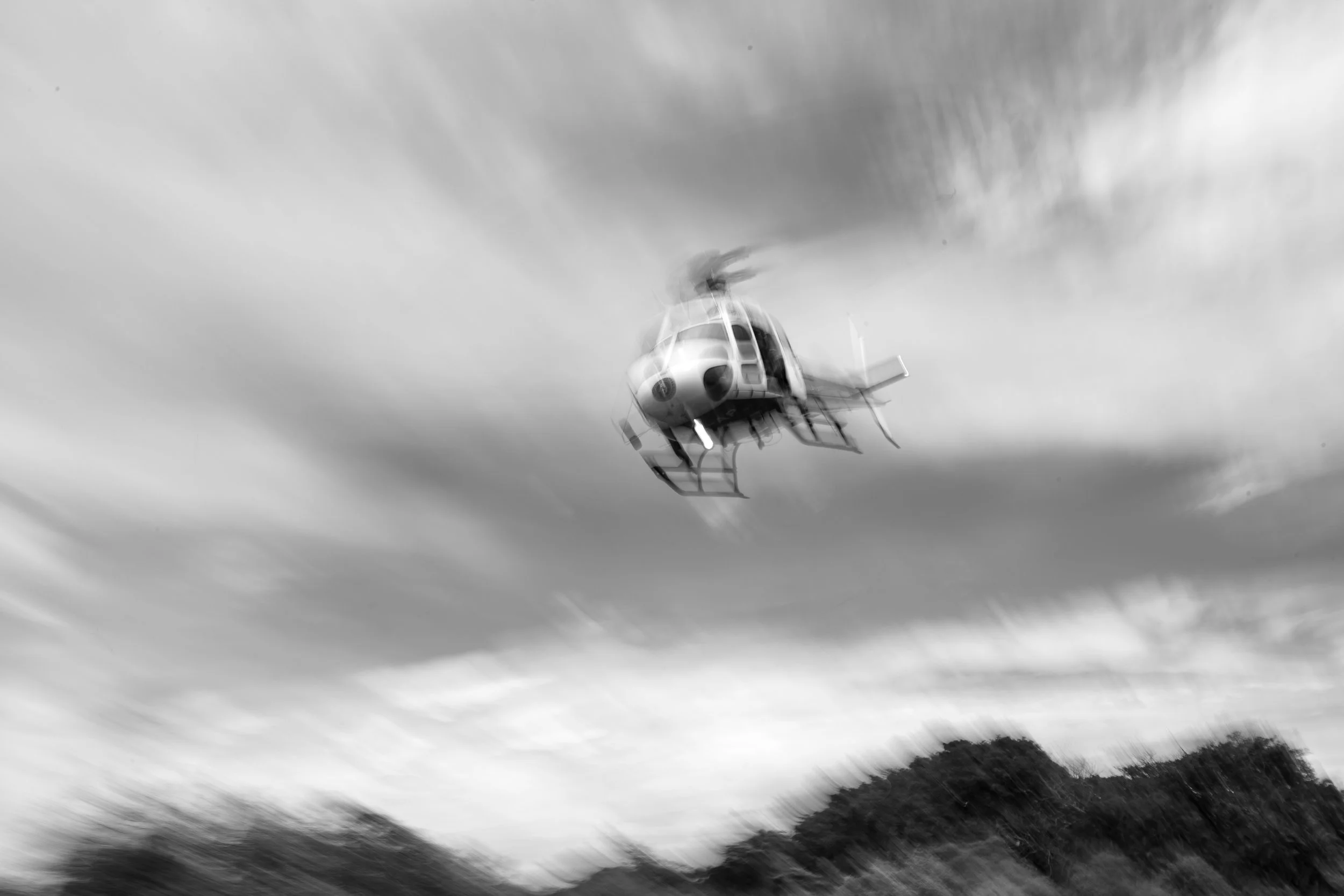
It's up early and a short 20min or so drive to Park HQ which is our starting point for the day. Harvey (the vet) gives a whistle stop tour of darting guns, drugs, do’s and don’ts and we are ready. But as it turns out, the weather is not! Whilst we have been prepping, the clouds have closed in, the rain has started to pour, and we are told to ‘stand down’. The principal reason being low cloud cover means the helicopter cannot fly and when darting rhino, that is fairly key to say the least.
An hour or two passes and we load up, ground team at the ready, one 4x4 loaded with ourselves in the back full of anticipation, and the second 4x4 full of trackers and chainsaws in preparation for the challenge ahead.
As we find out, it’s no easy feat this rhino darting, we spend the morning watching helicopter fly byes as they try and locate and flush the individual rhino into a safe spot for darting, a big make black rhino, called Kajenzie, but it is a no-go, he just won’t comply. We return to base and a short lunch at Camp, a bit deflated, but with a fresh understanding that no matter what, wildlife is still wildlife, no matter how many 4x4’s and helicopters you have at your disposal.
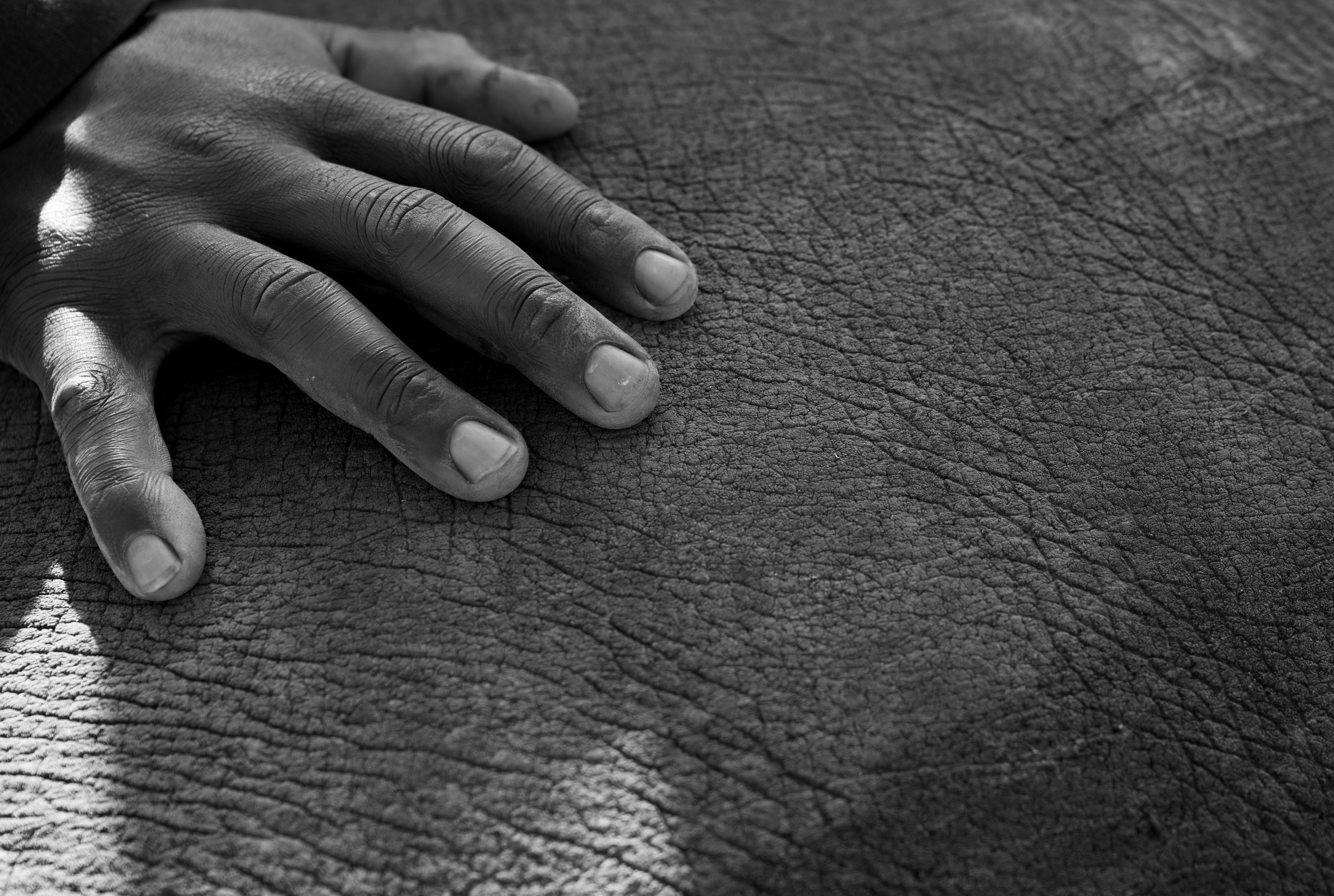
The afternoon comes around and it’s game on this time. Rhino located, heli in the air, rhino darted, and the ground team (that’s us) are ushered in to help. I have to say, it’s truly mind-blowing. Up this close and personal to what can only be described as one of the last remaining dinosaurs to roam the earth is at once an utter privilege and equally emotional. Its thick coarse skin hit t the touch as he lies breathing deeply in his newfound slumber, dust particles flitting up his wide nostrils as he inhales the scents of the grassy savannah, his tufted ears twitching as we buzz around him getting to work, its incredible. That’s aid, it’s only short time that the anaesthetic works – 45mins to be exact – and Harvey is keen that we do not extend this.
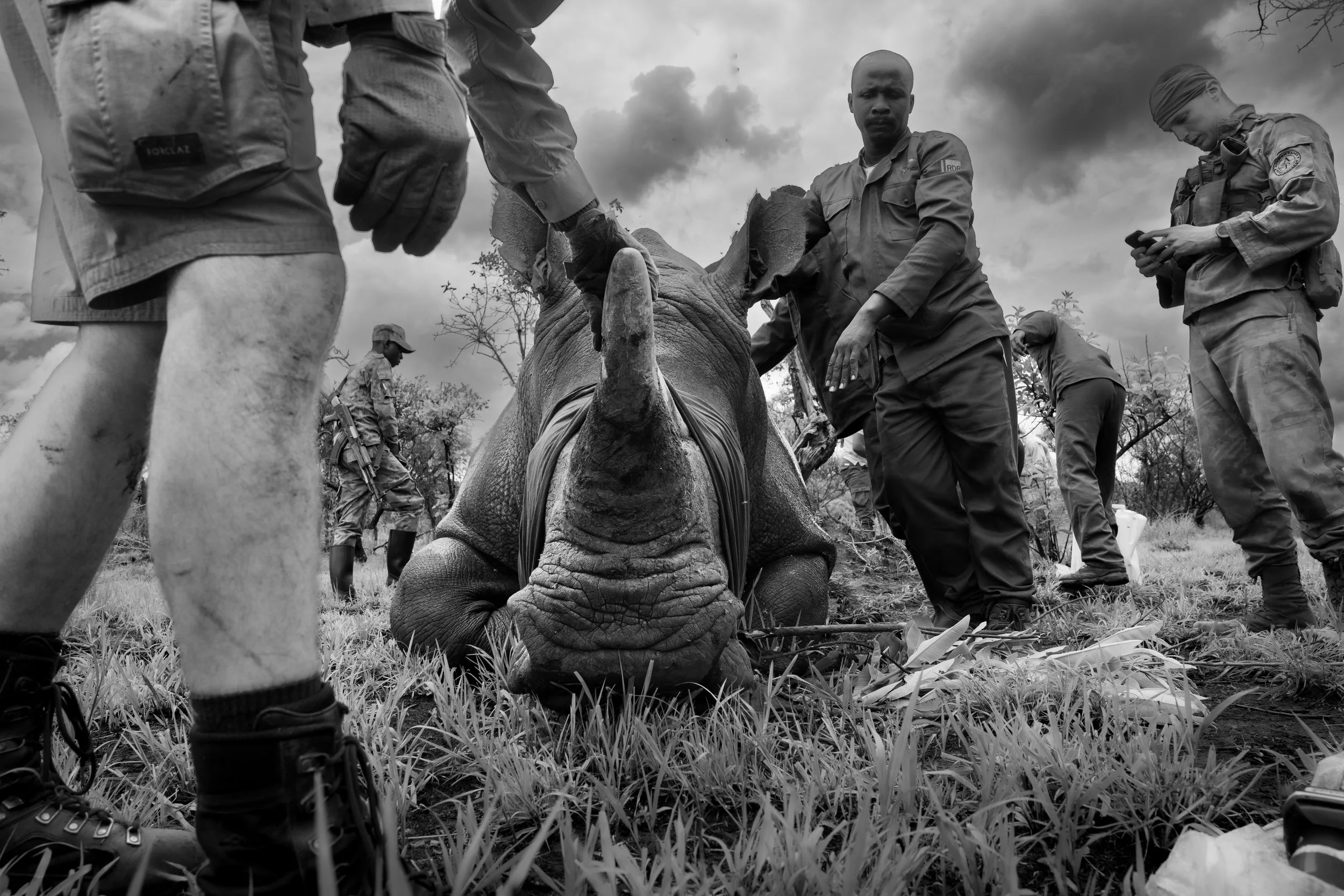
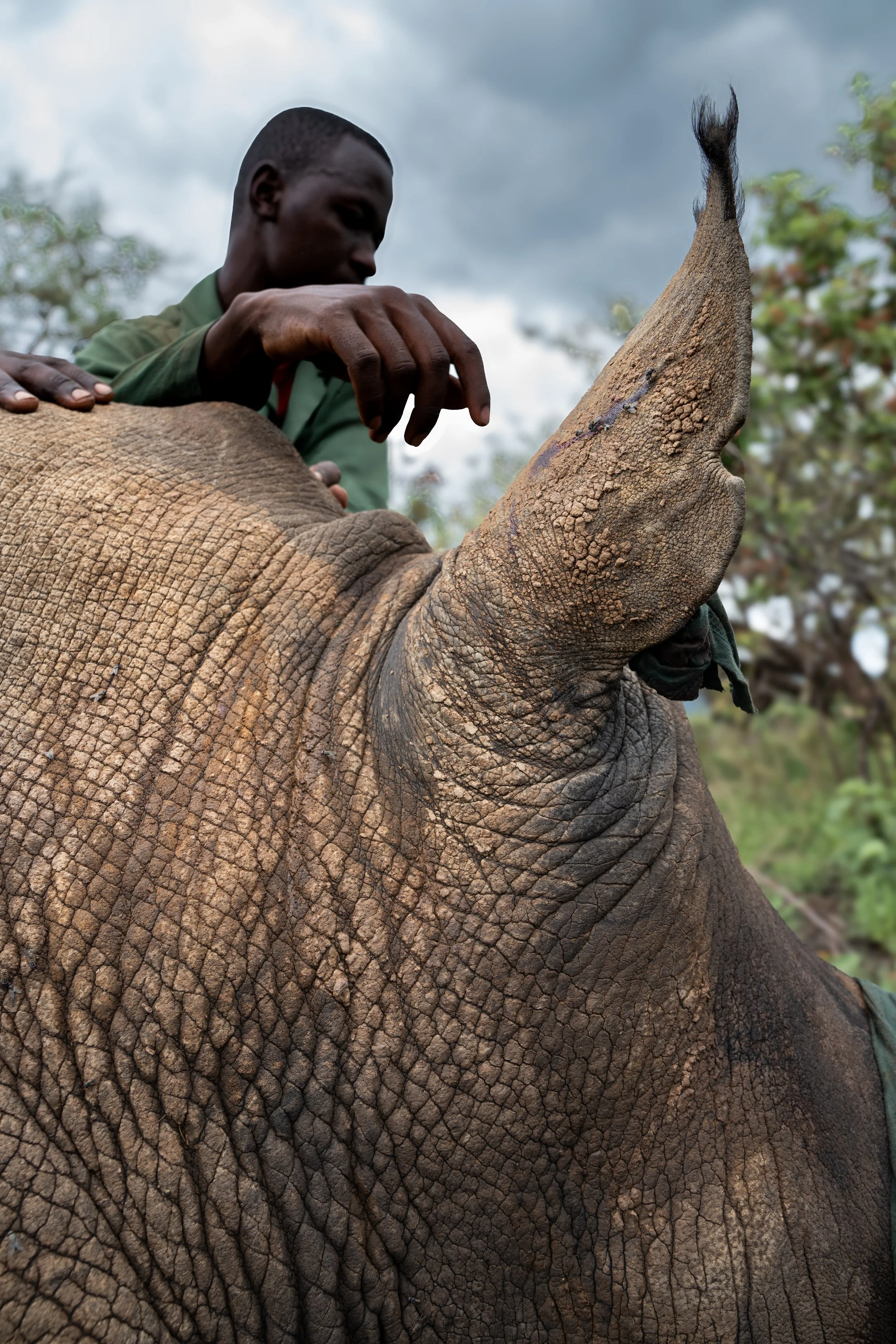
To the untrained eye what takes place next may seem mildly barbaric as via a series of saws and drills we have to cut into our prehistoric friends horn, it doesn’t hurt them, they do not even feel it, it is similar to us cutting our fingernails, but not quite as easy. Pushing and pulling and up against the clock, Harvey works away, drilling a hole to at first remove the previous tracker, and secondly insert the new one. This one does not play ball, but I will spare you all the detail, it’s a bit like a game of ‘Wildlife Countdown’ and as the clock ticks past its final minute, we are ushered clear as Harvey administers the antidote. It’s amazing how quickly it works, within only a few seconds, our sleepy prehistoric friend, slowly clambers to his feet, quizzically looks around, and trots off into the bush. Job done.